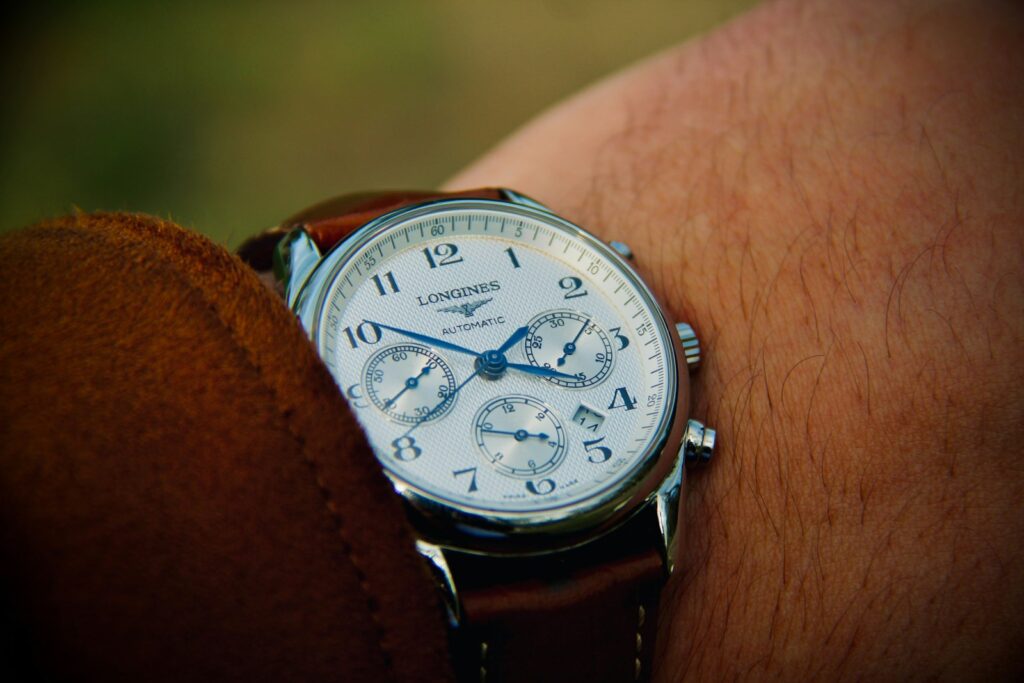
Honest sourcing note: “Alligator” and “crocodile” are different species — true alligator is American (Alligator mississippiensis); most Indonesian/Asian straps are saltwater crocodile (Crocodylus porosus), the same luxury tier. We label species accurately and never sell embossed calf as exotic. Genuine crocodilian is CITES-regulated (typically Appendix II, farmed); international orders ship with documentation, and you are responsible for your country’s import rules — this is general information, not legal advice. Prices are indicative ranges (mid-2026); final pricing is by quote. We are an independent authority and sourcing desk and connect you to vetted makers.
A 19mm alligator watch strap is a strap with a 19mm lug width, cut from American alligator (Alligator mississippiensis) and sized to fit watch cases that use this in‑between, often overlooked dimension. Collectors hunt for this size because many vintage and neo‑vintage watches use 19mm lugs, while most ready-made exotic straps are stocked only in 18/20/22mm.
What exactly is a 19mm alligator watch strap?
In strap terms, “19mm” refers to the lug width – the distance between the inside faces of the watch lugs where the spring bars sit. The rest of the strap’s dimensions are usually given as:
– Lug width → 19mm
– Buckle width (taper) → commonly 16mm or 18mm
– Length → often expressed as 115/75mm, 120/75mm, etc. (long side / short side, excluding buckle)
“Alligator” here should mean American alligator, not generic “gator” or Crocodylus porosus (saltwater crocodile). The hides, scale pattern and pricing differ, and CITES paperwork is not interchangeable.
A proper 19mm exotic strap listing should tell you at minimum:
– Species: American alligator vs porosus crocodile
– Cut: belly / flank / tail
– Stitching: machine vs hand, edge style, padding profile
– Exact taper: 19–18 or 19–16, not just “tapers nicely”
– Lining material: calf, hypoallergenic options, or exotic-on-exotic
– Hardware: include buckle or not; if yes, its width and material
Why 19mm is a hard-to-find size
Most factory and aftermarket suppliers tool up around “even” lug widths: 18, 20, 22 and sometimes 24mm. Production economics favor those sizes, so 19mm often gets left out of standard runs.
Yet a lot of important watches use 19mm lugs:
– Many Omega Speedmaster references (especially earlier and FOIS-style cases)
– Numerous vintage dress pieces from Patek, Vacheron, Longines, Universal Genève
– Smaller mid-century steel sports watches
– Some modern reissues that copy vintage case proportions
The result: owners of these pieces often end up forcing a 20mm strap into 19mm lugs (bulging leather, distorted scales) or living with a visible gap from an 18mm strap. On alligator in particular, either compromise looks wrong – the scales telegraph every mismatch.
That’s why a dedicated 19mm alligator strap, correctly cut and tapered, makes such a difference on a 19mm vintage strap fitment. It lets the case wear as it was drawn: full at the lugs, balanced at the buckle, clean at the spring bars.
Alligator vs crocodile at 19mm: know your species
For this size you’ll often see listings that say “19mm crocodile strap” or “19mm gator.” Those terms are used loosely in the market, but the underlying species matter.
American alligator (Alligator mississippiensis)
– Common trade names: alligator, American alligator
– Origin: farmed primarily in the USA
– Scale look: relatively round, pebbly belly tiles with softer transitions; more organic, “pillowy” feel when padded
– Typical use at 19mm: high-end dress straps, OEM-style replacements for luxury brands that specify alligator
– Regulation: CITES Appendix II; export/import needs correct species coding and paperwork
Saltwater crocodile (Crocodylus porosus, “porosus”)
– Common trade names: porosus, saltwater croc, “crocodile” in many listings
– Origin: farms in SE Asia and Oceania
– Scale look: more rectangular belly tiles, finer grain, slightly glossier when finished; high fashion houses use it for belts and bags
– Typical use at 19mm: premium aftermarket straps, especially for ultra-thin dress pieces or where a “flatter” scale layout is desired
– Regulation: also CITES Appendix II with similar documentation requirements
Mislabeling problem
A lot of mass-market “alligator” straps at odd sizes are actually generic crocodile or even embossed calf. The reverse happens too: genuine American alligator sold as “croc” because the vendor doesn’t know or doesn’t care.
Our house rule at Alligator Watch Straps is simple:
– If it’s American alligator, we call it alligator.
– If it’s porosus, we call it porosus crocodile.
– If it’s Nile or caiman, it’s labeled as such.
– If we can’t verify species and CITES origin, we won’t offer it.
This matters for collectors who care about ethics, resale value, and matching OEM spec – a Patek that shipped on American alligator shouldn’t quietly migrate to caiman sold as “gator.”
CITES and legality (non-legal overview)
Alligator and porosus hides used for 19mm straps come from CITES‑regulated sources. A few practical points (not legal advice):
– Both American alligator and porosus crocodile are listed on CITES Appendix II. Trade is allowed, but controlled.
– Export from the producing country requires CITES export permits specifying species, origin, and quantity.
– Import regulations differ by country. Some jurisdictions have extra layers (state-level rules in parts of the USA, for example).
– Finished straps can still require paperwork, especially for wholesale shipments crossing borders.
If you commission custom 19mm exotic straps through our sourcing desk, we only work with tanneries and workshops that document origin and species correctly. That protects you if your watch and straps travel with you, are insured, or are resold.
Key specs for a 19mm alligator strap
Below is a practical reference table for 19mm alligator / porosus watch straps.
| Spec | Typical Options at 19mm | Notes |
|---|---|---|
| Lug width | 19mm | Measure between lugs with calipers; don’t guess from “looks close to 20.” |
| Buckle taper | 19–18mm or 19–16mm | 19–16mm = dressier, more vintage; 19–18mm = sportier, better for deployants. |
| Length (L/S) | 110/70, 115/75, 120/75mm | Wrist ~6.0–7.25″ usually fits 115/75mm; bigger wrists often need 120/75 or longer. |
| Padding | Flat (2.0–2.5mm) or padded (3.5–5.0mm center) | Thin for dress and vintage; thicker for modern sport cases. |
| Cut | Belly, belly-to-flank, flank | Belly = larger tiles; flank = smaller, more irregular scales that suit smaller lugs. |
| Construction | Turned-edge or cut-edge | Turned-edge hides the raw edge for a cleaner dress look; cut-edge can feel sportier. |
| Lining | Calf, Zermatt-style calf, rubber | Calf is standard; premium calf or rubber for sweat resistance and sensitive skin. |
| Grade (hide quality) | “Standard”, “Premium”, “Selected belly” | Higher grades = cleaner, more symmetrical tiles; important on visible 19mm lugs. |
How 19mm interacts with vintage and modern cases
19mm vintage strap fitment
Most true vintage 19mm cases (1950s–1970s) were slim, with narrow spring-bar shoulders and thin strap tunnels. For these:
– Strap thickness at the lug should often stay around 2.0–2.7mm finished.
– Fully padded “OEM style” straps meant for modern sports watches can bind, flare, or stress the spring bars.
– Smaller scales (upper belly or flank cut) usually balance better against 34–36mm case diameters.
If you’re trying to keep a vintage watch period-correct, a 19mm crocodile strap in porosus with a fine, rectangular belly cut can echo the look of mid-century dress straps that many European maisons used. American alligator flank can do similar work if the scale size is chosen carefully.
Modern 19mm watches
On neo‑vintage and some contemporary watches (e.g., modern Speedmaster references that still use 19mm):
– You can go thicker at the lug (3.0–4.0mm) without functional issues.
– Taper choice is key: 19–16mm conveys “dressy FOIS / CK2998” while 19–18mm feels closer to OEM sporty.
– Neutral colors (black, dark brown, navy) in matte alligator belly or porosus often pair best with tool-ish dials.
Grades, finish, and how they really affect the strap
Hide grading is often obscured in marketing, but it materially affects the look, especially on a narrow 19mm lug where you see fewer tiles.
Typical practical grades for watch straps:
– Standard: Clean hide but with more natural variation. Ideal for casual watches, offers the best value.
– Premium / Selected: Tighter screening for scars, bites, and irregular tile shapes. Better for dress pieces, higher rejection rate from the same batch of hides.
– “Special cut” (not always labeled as a grade): Specific area of the hide (prime belly, centered tiles, mirror-image cuts for paired straps).
Finish options you’ll commonly see:
– Matte: Low sheen, more tool-like; excellent for vintage-inspired 19mm straps.
– Semi-matte / satin: Soft glow, suits most modern dress watches.
– Shiny / gloss: High-polish; works with formal watches but can look out of place on 19mm tool pieces.
Because a 19mm lug exposes less leather than a 22mm, gloss finishes can feel subtler than you expect. But on small vintage cases, a fully shiny porosus strap can dominate the watch; many collectors prefer matte or satin at this size.
Price ranges for 19mm alligator and crocodile straps
Exact pricing depends on species, grade, construction, origin, and order size. Based on what we see across the specialist market (last verified June 2026):
- Ready-made 19mm American alligator (retail)
- Approx. US$120–US$260 for standard grades, non‑OEM, quality workshop construction.
- Ready-made 19mm porosus crocodile
- Approx. US$180–US$360 for genuine porosus, depending on finish and grade.
- Custom one-off 19mm alligator (made-to-order)
- Approx. US$220–US$450+ depending on hide selection, stitching, lining and special requests.
- Wholesale / OEM-style 19mm exotic straps
- Per-unit costs drop with volume, but expect brackets aligned with the above when hides and workmanship are comparable.
These are market ranges, not a quote from Alligator Watch Straps. For a specific build (e.g., matte black alligator, 19–16mm, 115/75mm, hand-sewn, turned edge, sweat-resistant lining) you’ll need a current quote.
At this point, if you have a watch in mind and want honest options, you can plan your trip through sizing, species, and budget with us via email or WhatsApp – we’ll talk in real measurements, not vague marketing.
Choosing between off-the-shelf and custom 19mm straps
Off-the-shelf 19mm alligator or crocodile
Advantages:
– Faster: in stock, no build queue.
– Lower cost: especially for standard colors (black, brown, blue).
– Easy returns if sizing is wrong (depending on retailer policies).
Limitations:
– Length options are usually standard only (e.g., 115/75).
– Taper may be fixed at 19–18mm or 19–16mm, not both.
– Fewer lining, stitch color, and padding combinations.
For many owners of one or two 19mm watches, a well-made stock 19mm alligator or 19mm crocodile strap is completely sufficient – especially if the lug length and wrist size are “average.”
Custom 19mm builds
Custom makes sense when:
– Your wrist is very small or large, and standard lengths don’t sit correctly.
– The watch has curved or tight lugs that need a specific profile or end shape.
– You care about precise hide selection (e.g., matched tile size across both strap halves).
– You want details that matter to you: tone-on-tone vs contrast stitch, specific lining, quick-release spring bars, or compatibility with a particular deployant.
Our sourcing desk doesn’t maintain a house workshop page full of claims; instead, we vet specialist strapmakers used by collectors and micro‑brands, then match requests with what they actually do well. Species, grade and thickness are set out upfront, in writing.
To explore a custom or small OEM run, you can plan your trip with us; WhatsApp is often easiest for fast photos, scale selection, and case‑side measurements.
Fitment details that matter more at 19mm
Because 19mm sits between 18 and 20mm, tolerance mistakes are more obvious. Pay attention to:
– True width: A “19mm” strap should measure very close to 19.0mm at the lug. 18.6mm will leave visible gaps; 19.4–19.6mm may be too tight for many cases.
– Spring bar hole position: On thin vintage lugs, a strap with holes punched too far from the tip can catch the case or limit articulation.
– Thickness at the last 5–7mm by the lug: This area needs enough flexibility to follow the case curve, especially on watches with short lugs.
If you’re reusing a branded pin buckle or deployant, confirm:
– The inside width of the buckle (often engraved, e.g., “16” or “18”).
– The style of the tip (rounded, square, pronounced shoulder) so your strapmaker can match it.
A 19–16mm custom strap ordered for a buckle that’s actually 15mm is a common and avoidable mistake.
19mm vintage strap aesthetics: getting the era right
Collectors who care about period correctness often look for:
– Slim profiles: 2.0–2.5mm at lug, very mild or no padding.
– Subtle tapers: 19–16mm or even 19–14mm on small gold dress watches.
– Conservative stitch: tone-on-tone or slightly darker than the leather, with fine gauge.
– Matte finish: especially on brown and burgundy straps, to avoid a high-fashion look on an otherwise understated watch.
For tool‑ish vintage chronographs, a slightly thicker matte alligator flank cut in dark brown or charcoal can read as “upgraded but honest” – especially on 36–39mm steel cases that still use 19mm lugs.
How Alligator Watch Straps can help
As a specialist, we’re not interested in slapping the word “alligator” on embossed calf and calling it a day. Our focus for 19mm is:
– Correct species labeling: American alligator vs porosus crocodile vs everything else.
– Real measurements: lug width, taper, thickness, length, padding profile.
– Honest grading: clear about what you gain (and pay) as you step up in hide quality.
– Vetted sourcing: only from suppliers that back up their species and CITES claims with documentation.
If you have a specific 19mm watch – vintage, modern, or something in between – we can talk through:
– Ideal thickness and cut for your case
– Belly vs flank for tile size and look
– Taper and length to match your clasp and wrist
– Budget bands, midrange, and “no-compromise” options
You can plan your trip to a better‑fitting 19mm alligator or crocodile strap with us via email or WhatsApp. No obligation; we’d rather you buy the right thing once than the wrong thing twice.
FAQs
Can I safely squeeze a 20mm alligator strap into 19mm lugs?
You can force some 20mm straps into 19mm lugs, but it tends to crush the edges, distort the scale pattern, and stress the spring bars. On exotic leather this looks especially rough and can shorten the strap’s life. A true 19mm alligator strap, cut to the correct width, will look cleaner and wear better.
Is a 19mm crocodile strap always porosus?
No. “Crocodile” in listings can mean porosus, Nile, caiman, or just embossed calf. If species matters to you, ask for the Latin name (for porosus it should be Crocodylus porosus) and, ideally, supporting documentation. We never assume “crocodile” equals porosus without verification.
What taper should I choose for a 19mm vintage watch?
For most vintage dress pieces with 19mm lugs, a 19–16mm taper feels most period-correct and visually balanced. On slightly larger vintage chronographs or modern reissues, 19–18mm can work well, especially if you’re using a deployant. Your existing buckle width is often a practical deciding factor.
How thick should a 19mm strap be for an older watch?
Many mid‑century cases are happiest with straps around 2.0–2.7mm at the lugs and minimal padding. Thicker, heavily padded straps can bind in narrow lug gaps and look out of scale. For modern watches with 19mm lugs you can go up to 3.5–4.0mm, depending on the case height.
Can you help with wholesale or OEM-style 19mm exotic straps?
Yes. We maintain a sourcing desk that works with vetted suppliers for both custom and wholesale 19mm alligator and porosus straps. We can discuss your target specs, expected volumes, and budget, then match you with appropriate options. To start that process, plan your trip with us and mention that you’re interested in OEM or wholesale; WhatsApp is helpful for sharing case drawings and prototypes.