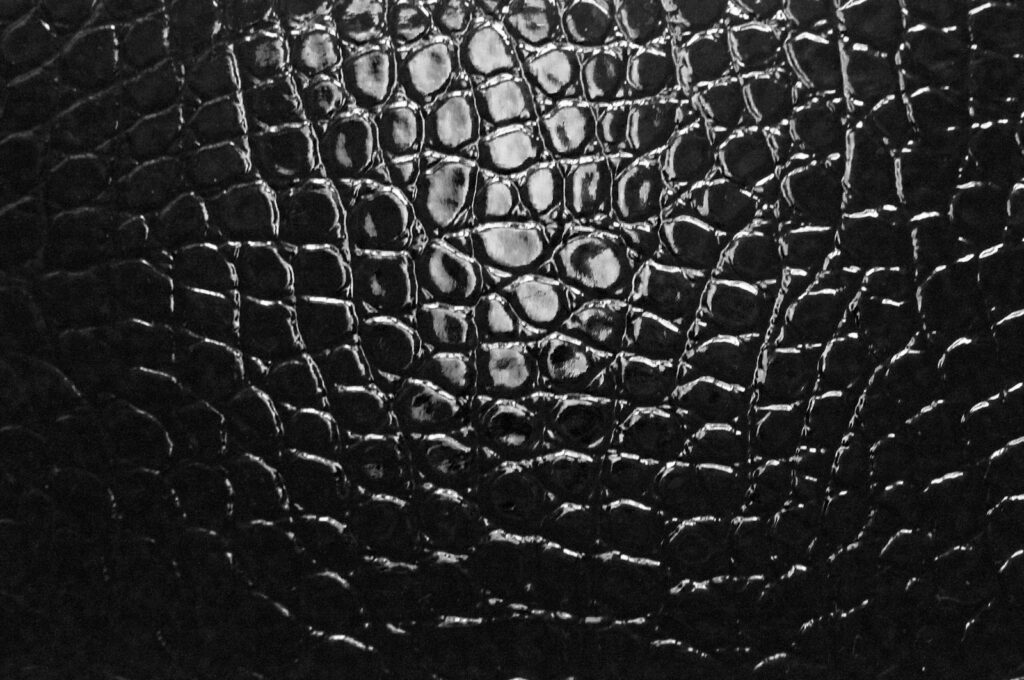
Honest sourcing note: “Alligator” and “crocodile” are different species — true alligator is American (Alligator mississippiensis); most Indonesian/Asian straps are saltwater crocodile (Crocodylus porosus), the same luxury tier. We label species accurately and never sell embossed calf as exotic. Genuine crocodilian is CITES-regulated (typically Appendix II, farmed); international orders ship with documentation, and you are responsible for your country’s import rules — this is general information, not legal advice. Prices are indicative ranges (mid-2026); final pricing is by quote. We are an independent authority and sourcing desk and connect you to vetted makers.
An american alligator watch strap is a watch band cut from the hide of the American alligator (Alligator mississippiensis), the only true alligator species used in leather. On this page, we explain what a true alligator watch strap actually is, how it differs from saltwater crocodile, and how to spec, source, and care for one that will last.
What Is an American Alligator Watch Strap?
An American alligator watch strap is a high‑grade leather strap made from the belly or flank of farmed American alligator (A. mississippiensis), almost always from US‑regulated stock (especially Louisiana). In trade, this is the “true alligator watch strap” that high‑end collectors mean when they say “alligator.”
Key characteristics of a genuine US alligator watch band:
– Species: Alligator mississippiensis (not crocodile)
– Origin: Primarily US‑farmed, heavily associated with Louisiana alligator strap production
– CITES status: Appendix II (internationally controlled trade, mostly from farmed/ranch sources)
– Pattern: Clean, relatively uniform tiles on the belly; no visible follicle pores in the tile centers
– Feel: Fine, dense fiber structure; soft but not floppy when properly tanned
– Usage: Dress and high‑luxury sports watches; common in high horology OEM straps
Our editorial rule is simple: “Alligator” on this site means American alligator, A. mississippiensis. If the hide is something else — for example saltwater crocodile (Crocodylus porosus) or Nile crocodile (C. niloticus) — we label it as crocodile, not alligator.
Why American Alligator Is the “True Alligator”
There are only two alligator species on earth: the American alligator (Alligator mississippiensis) and the Chinese alligator (Alligator sinensis). The luxury leather trade — and essentially all high‑end watch straps — use the American species.
Most “alligator” straps sold out of Indonesia and other Asian workshops are actually:
– Saltwater crocodile (Crocodylus porosus), or
– Occasionally Nile crocodile (Crocodylus niloticus), or
– Embossed calfskin stamped to look like alligator
Porosus is a top‑tier luxury crocodile, but it is not an alligator. We treat that difference seriously:
– True alligator watch strap → American alligator (A. mississippiensis)
– Crocodile strap → Crocodylus species (porosus, niloticus, etc.)
– Embossed strap → Calf or cowhide with a printed pattern, not “exotic”
On Alligator Watch Straps, every strap or hide we discuss is species‑labeled and pattern‑labeled accurately. Mislabeling a porosus strap as “alligator” is common in online listings; our role is to help you see and name what you’re actually buying.
American Alligator vs Saltwater Crocodile (Porosus)
Both American alligator and saltwater crocodile sit at the top of the exotic leather hierarchy. They are similar in price range and prestige, but the skins behave and age differently on the wrist.
Below is a distilled comparison for watch straps specifically:
| Feature | American Alligator (A. mississippiensis) | Saltwater Crocodile (C. porosus) |
|---|---|---|
| Trade name | True alligator | Porosus crocodile / saltwater crocodile |
| Tile pattern (belly) | Relatively uniform, blocky tiles; soft visual edges | Smaller, more elongated and sometimes irregular tiles |
| Follicle pores | No visible pores in tile centers | Fine “pin hole” pores often visible near tile edges |
| Hand feel | Supple, plush, slightly thicker fiber structure | Finer, slightly crisper, can feel “drier” if lightly finished |
| Grain clarity (matte) | Soft, satin look; tiles can appear smoother | Sharper tile edges; scale borders more defined |
| Typical source regions | United States (Louisiana and neighboring states) | Australia, Southeast Asia, some Pacific islands |
| CITES listing | Appendix II (farm/ranch exports with permits) | Appendix II (farm/ranch exports with permits) |
| Strap personality | Classic dress; subtle, “quiet” luxury presence | Sharper, more assertive pattern; hybrid dress‑sport look |
| Price tier (indicative) | High; typically similar to or slightly above porosus for same finish | High; historically the flagship crocodile for many maisons |
Both can make exceptional straps. If you like cleaner tiles and a softer, more traditional dress feel, American alligator usually wins. If you prefer a slightly more structured pattern and visible pores, porosus might suit you better.
We source and discuss both — and label each clearly by species.
How to Identify a Genuine American Alligator Watch Strap
Because “alligator” is over‑used as a marketing term, it pays to know what you’re examining. Three main aspects: the surface, the cut, and the construction.
1. Surface: tiles, pores, and pattern
On a true American alligator strap (belly cut):
– Tiles: Fairly rectangular and consistent in size across the width of the strap, especially near the lugs.
– Edges: Borders between tiles are visible but not razor‑sharp.
– Pores: No small pinhole pores at the center of each tile. If you see a line of pores in a “V” near a scale corner, you are probably looking at crocodile, not alligator.
– Transition areas: Toward the strap tip, tiles may transition into smaller, more irregular scales. This is normal and actually a sign of a real hide, not a repeating print.
In contrast, an embossed calf strap:
– Shows obviously repeating patterns if you compare multiple straps
– Has flat, uniform depth; the “gaps” between tiles feel shallow or even perfectly smooth under a fingertip
– Often has identical pattern geometry on both sides of the strap
2. Cut: belly vs flank vs hornback
For American alligator watch straps:
– Belly cut: The standard for dress straps. Clean tiles, flatter profile, best comfort against the wrist.
– Flank/side: Smaller and less regular scales; used for narrower straps or sportier looks.
– Hornback: Raised ridges from the dorsal area. True hornback alligator straps exist, but are less common than hornback crocodile. They are thicker, more rigid, and visually aggressive.
Most “Louisiana alligator strap” offerings in fine watchmaking use belly or slight belly‑flank transition for the upper (outward facing) piece, and a smooth calf or Zermatt‑type leather for the lining.
3. Construction: lining, padding, and edge
A high‑grade US alligator watch band usually has:
– Lining: Non‑alligator lining such as calf, goat, or a sweat‑resistant specialty lining. Alligator‑on‑alligator is rare and not ideal close to the skin.
– Padding: Moderate, shaped padding under the alligator, tapering toward the tip. Belly alligator is not meant to be over‑stuffed; the fiber structure prefers modest, even padding.
– Edges: Skived and folded (turned edge) or precisely cut and stained. Poor edge finishing is a red flag that corners were cut elsewhere.
The leather itself cannot tell you the quality of the strapmaker’s work. A mediocre build can ruin a superb hide. That is why we focus both on the material and on the maker when recommending or sourcing straps.
Why American Alligator Costs What It Does
American alligator is expensive for reasons you can see on the strap and reasons you can’t.
Visible factors:
– Yield: Watch straps want the flattest, cleanest belly tiles. That’s a narrow section of the hide. Even a large, expensive flank area can’t be used for classic straight‑tile straps.
– Grading: Small scars, healed markings, or brand imperfections on the hide push it down a grade. High‑grade watch‑quality bellies are a small fraction of total skins.
– Symmetry: Getting matching grain on both strap halves — or multiple straps from a single hide for wholesale — consumes “the best part” of the belly quickly.
Less visible but critical:
– Farming and ranching costs: American alligator production is heavily regulated in the US. Ranchers must manage water, feed, temperature, and welfare standards at scale.
– Compliance: CITES Appendix II listing means traceability, tags, and paperwork for export from the US and import into destination countries.
– Tanning: High‑quality alligator tanning is a specialized process. Controlling fat liquors, pH, and finishing to avoid boardiness or excessive stretch is both art and science.
Indicative retail ranges for a made‑to‑order American alligator strap from a reputable small maker (last verified June 2026):
– Standard 20/16 mm matte belly, lined, with buckle: approximately USD 220–400 per strap
– Premium specs (custom color, unusual lug width, OEM‑style quick‑release, deployant‑ready): approximately USD 350–650+ per strap
Wholesale/volume pricing depends on order size, color, and grade selection; minimums often start at a low double‑digit strap quantity per color/size combination.
These are broad ranges, not quotes. For current numbers and maker availability, plan your trip through our sourcing desk — email or WhatsApp — and we’ll walk through options without pressure.
Grading American Alligator for Watch Straps
Hide grading is not fully standardized across all tanneries, but the logic is consistent: fewer and smaller defects near the center belly = higher cost.
Belly tile quality
For watch straps, we evaluate:
– Scar presence: Natural scars, harvest marks, or defects in the primary tile area.
– Tile symmetry: Consistency of tile size and shape across the usable strap zone.
– Stretch behavior: How the fiber structure responds when flexed along and across the tiles. Over‑stretchy hides won’t hold precise strap shapes.
A simplified view of grades often used for strap selection:
- Top / Grade I
- Very clean central belly; minimal or no visible markings on the strap area. Best for large‑size dress straps in pale or bright colors where flaws would show.
- Grade II
- Minor healed marks or small irregularities that can be placed near strap tips or holes. Excellent for most colors, especially mid‑dark tones.
- Grade III and below
- More visible imperfections requiring creative cutting or non‑strap usage. Rarely used for high‑end watch straps unless intentionally rustic.
We generally recommend:
– Pale matte (e.g., cream, light taupe, pale blue): aim for the highest feasible grade; flaws will telegraph through.
– Classic dark colors (black, navy, dark brown, burgundy): Grade II from a strong tannery can be visually identical on the wrist to “top” grade.
Common Specs: Widths, Tapers, and Styles
American alligator adapts well to both formal and everyday‑wear straps if cut and built properly.
Widths and tapers
Typical “true alligator watch strap” specs we see collectors favor:
– Dress standards:
– 18/16 mm, 19/16 mm, 20/16 mm
– Gentle taper (2–4 mm) from lugs to buckle
– Modern sport‑dress:
– 20/18 mm, 21/18 mm, 22/18 mm
– Slightly less taper to hold presence on steel sports cases
– Integrated or OEM‑style:
– Exact‑fit at the lugs and sometimes no taper, depending on case design
For smaller wrists, a little more taper (e.g., 20/16 rather than 20/18) helps the strap drape and keep the American alligator belly tiles centered on top of the wrist where they are most visible.
Profiles and padding
Because alligator has a dense yet compliant fiber structure, it behaves best with medium or subtle padding:
– Ultra‑flat:
– 2.2–2.6 mm overall thickness
– Good for ultra‑thin dress watches and vintage pieces with short lug posts
– Moderate padded:
– 3.0–3.8 mm at the lugs, tapering toward the tip
– The modern default for most 38–42 mm watches
– Heavy padded:
– 4.0–5.0+ mm
– Viable for large sports watches but demands careful skiving so the strap still flexes cleanly at the first hole
Matte American alligator in moderate padding gives the most versatile “US alligator watch band” look: refined without being overly delicate.
Finishes: matte vs glossy
The same hide can be finished in very different ways.
– Matte / satin:
– Minimal surface glazing
– Tiles show natural grain geometry and micro‑texture
– Ages with a gentle sheen over time, particularly on the top surface and near the buckle holes
– Semi‑gloss:
– Light glazing or top coat
– Slightly deeper color, more formal than matte but less reflective than full gloss
– High gloss / patent‑like:
– Strong glazing and potentially multiple coats
– Very dressy but can show scratches and creases more readily on the first few months of wear
From a durability perspective, matte and semi‑gloss are generally more forgiving. Glossy American alligator relies on keeping the finish layer intact; any deep crease or crack is visually louder even if the underlying leather is still structurally sound.
Durability: How Long Does American Alligator Last?
A well‑made American alligator strap, worn in normal office and casual rotation, can reasonably last several years. The limiting factors are less about the species and more about:
– Sweat and moisture exposure
– UV and heat
– How aggressively the strap is bent when putting it on and taking it off
– The quality of the lining and stitching
Compared with porosus crocodile, American alligator:
– Has a slightly more “plush” feel and can compress a bit more under padding
– Tends to soften more noticeably in the first months of wear, then stabilizes
– Shows creasing in the tile gaps earlier, especially on very thin, tight‑curved straps
In practice, both species rank among the most durable exotics for watch straps if you:
– Avoid soaking the strap (shower, sea, pool)
– Let it dry fully off‑wrist if it does get damp
– Rotate with another strap if you perspire heavily or live in high humidity
Is alligator “more durable” than porosus? Not reliably across all tannages and makers. Think of them as peers: either can outlast the other depending on how the strap was built.
CITES, Legality, and Responsible Sourcing
American alligator (Alligator mississippiensis) is listed on CITES Appendix II. That means:
– International trade is controlled but allowed from approved sources
– Farmed and ranch‑raised skins dominate the leather market
– Skins are tagged and exported under permit from the US when crossing borders
For end buyers:
– Domestic purchase (e.g., buying a strap within the same country where it was made) is typically straightforward, subject to local regulations.
– Cross‑border shipping of alligator straps can require paperwork on the exporter’s side and may be restricted or more tightly regulated in some destination countries.
We are not a law firm and this page is not legal advice. Regulations change, and different countries treat personal goods versus commercial shipments differently. Before ordering an American alligator watch strap across borders, verify:
– Your country’s current import rules for CITES Appendix II leather goods
– Any airline/airport restrictions if you plan to travel with multiple exotics
Our sourcing desk works only with suppliers who can document species and legal origin. For international projects, we’ll flag when the maker is set up for compliant export — and when they are not.
Our Role: Independent Authority and Sourcing Desk
Alligator Watch Straps is not a tannery and not a mass retailer. We are an independent, material‑first resource focused on:
– Species accuracy and education: clear distinction between American alligator, porosus, niloticus, caiman, and embossed calf.
– Technical behavior: how each leather grades, cuts, and holds up on the wrist.
– Maker curation: connecting collectors and small brands with strapmakers and suppliers who work cleanly with genuine exotics.
If you ask us for an “american alligator watch strap,” we will:
1. Confirm you genuinely want A. mississippiensis, not porosus with an “alligator look.”
2. Discuss lug width, taper, profile, lining, color, and finish with you in detail.
3. Suggest vetted makers or workshops suited to the spec and quantity you want — single custom piece or wholesale run.
No one can pay to change what we publish; if you proceed with our partner they may pay us a referral fee at no extra cost to you.
For a tailored recommendation or a wholesale brief, you can plan your trip with us by email or WhatsApp; send your case model, lug width, wrist size, and any photos of textures you like.
Care and Maintenance: Making an Alligator Strap Last
American alligator behaves predictably under real‑world wear. A few habits make a disproportionate difference in lifespan.
Daily use
– Put the watch on over the top of your wrist, not by wrenching the strap into an extreme “U” curve. Let the case rotate slightly while you buckle it.
– Use the same or adjacent hole consistently; repeatedly forcing the tongue through new holes creates localized stress that shows faster on exotics.
Moisture and sweat
– Avoid immersing the strap. Alligator is more water‑tolerant than many think, but repeated soak/dry cycles stiffen and eventually crack the finish and fibers.
– If it gets wet, pat gently with a cloth and allow it to dry at room temperature away from direct heat. Do not use hairdryers or heaters.
– For high‑perspiration use, consider:
– Rubber or textile for workouts
– An alligator strap with a sweat‑resistant lining for daywear, rotating with a second strap
Cleaning and care products
– Wipe down with a slightly damp (not wet) soft cloth after heavy use.
– Avoid aggressive cleaners, alcohol wipes, or household leather sprays.
– If you want to condition: use a minimal amount of a neutral, exotic‑safe leather conditioner on a test patch first, applied sparingly. Over‑conditioning is more damaging than doing nothing.
Storage
– Store flat or gently curved; avoid tight rolls or bending the strap under the watch in a small box.
– Keep out of prolonged direct sunlight to prevent color fade, especially on lighter matte shades.
– Allow straps time off‑wrist between wears if they’ve absorbed noticeable moisture.
Under these conditions, the first parts to age will usually be:
– Stitching near the buckle holes
– Tile gaps on the underside of the curved section
– The very tip, which sees the most physical contact
These are normal wear patterns and can often be delayed by rotating straps and buckling carefully.
Custom and Wholesale American Alligator Options
Whether you are a single‑watch owner wanting one perfect Louisiana alligator strap, or a microbrand building a launch collection, the variables are the same — only the volumes change.
Custom one‑off or small batch
Typical options:
– Species: American alligator clearly labeled; porosus crocodile offered as a separate option, not as “alligator.”
– Cut: Belly for dress, possible flank elements for narrower or sportier straps.
– Specs: Your lug width, taper, and thickness, plus lining choice, stitch color, and buckle/deployant compatibility.
– Lead time: Often 3–8 weeks from spec confirmation, depending on maker workload and color availability.
Indicative pricing (last verified June 2026):
– Standard custom: around USD 250–450 per strap using high‑grade A. mississippiensis
– Highly specialized (rare colors, hand‑dyed, OEM‑pattern remakes): around USD 400–750+
Wholesale / private‑label runs
For brands and retailers, variables expand:
– MOQ: Low tens of straps per color/size is common, sometimes lower with surcharges.
– Hide sourcing: Choosing grades and colors that balance yield and cost for your design.
– CITES/export: Ensuring the production partner is structured for your target markets.
Expected outcomes:
– Unit pricing lower than custom, but significant design and logistics work upfront.
– Lead times from 6–16 weeks depending on hide availability and production queue.
To scope a project, share your target widths, tapers, color palette, and annual volume via plan your trip — email or WhatsApp — and we’ll outline realistic routes and constraints so you can budget credibly.
FAQs: American Alligator Watch Straps
What is American alligator leather exactly?
American alligator leather comes from the skin of Alligator mississippiensis, a reptile native to the southeastern United States. For watch straps, tanneries use primarily the belly region, which has flat, relatively uniform tiles. The species is managed under CITES Appendix II, with most leather coming from regulated farms and ranching programs.
How do I tell American alligator from porosus crocodile on a strap?
On a belly‑cut strap, American alligator usually has blockier tiles with no visible follicle pores in the tile centers and a slightly softer, more “quiet” pattern. Porosus crocodile often shows tiny pinhole pores near scale corners and more elongated or irregular tiles. Under magnification, those pores are the easiest giveaway that you are looking at crocodile, not alligator.
Is American alligator more durable than crocodile for watch straps?
American alligator and porosus crocodile are both top‑tier for durability when properly tanned and constructed. The differences in longevity are usually due to strap design, lining, and how the strap is worn rather than the species itself. Alligator tends to feel plusher and show creasing slightly earlier in some builds, but can easily give years of service under normal wear.
Are most “alligator” straps from Asia actually American alligator?
No. Many “alligator” straps produced in Indonesia and broader Asia are made from saltwater crocodile (Crocodylus porosus) or other crocodiles, and some are embossed calf sold under vague wording. Porosus is a legitimate high‑end exotic, but it is not an alligator. A reputable seller will specify the exact species and will not call embossed calf “alligator.”
Can I travel internationally with an American alligator watch strap?
Many people do travel with CITES Appendix II leather goods like alligator straps without issues, but rules vary by country and can change. Commercial shipments and multiple items draw more scrutiny than a single strap on your wrist. If you plan to buy or transport American alligator across borders, check current regulations for your origin and destination and, for purchases, use sellers who understand export documentation for exotics.