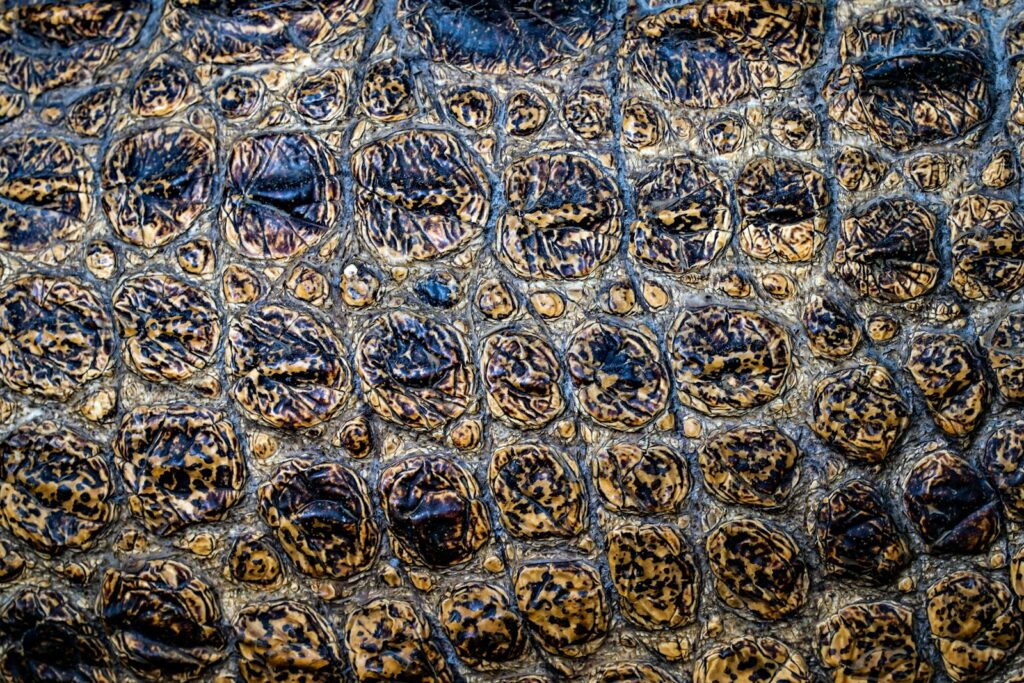
Honest sourcing note: “Alligator” and “crocodile” are different species — true alligator is American (Alligator mississippiensis); most Indonesian/Asian straps are saltwater crocodile (Crocodylus porosus), the same luxury tier. We label species accurately and never sell embossed calf as exotic. Genuine crocodilian is CITES-regulated (typically Appendix II, farmed); international orders ship with documentation, and you are responsible for your country’s import rules — this is general information, not legal advice. Prices are indicative ranges (mid-2026); final pricing is by quote. We are an independent authority and sourcing desk and connect you to vetted makers.
A brown alligator watch strap is a watch band cut from genuine American alligator leather, tanned in brown tones ranging from light tan to deep chocolate. On this page we break down how brown behaves on the wrist: shades, patina, pairings, and what’s actually alligator versus crocodile or embossed calf.
What “brown alligator” actually means
In the luxury-strap world, “brown alligator” is often used loosely, but it should mean two precise things:
- Species: American alligator (Alligator mississippiensis), CITES Appendix II, almost always farmed or ranched.
- Material: Real exotic hide, not calf embossed with a reptile print and then dyed brown.
Many “brown crocodile watch strap” listings coming from Indonesia or wider Asia are actually saltwater crocodile (Crocodylus porosus) sold under the colloquial term “alligator.” Porosus is a top-tier crocodilian, but it is a different species with its own grain and licensing. An honest strap maker should tell you, in writing, whether the strap is:
- American alligator (A. mississippiensis)
- Saltwater crocodile / porosus (C. porosus)
- Nile, caiman, or another crocodilian species
- Or embossed bovine (not exotic at all)
At Alligator Watch Straps, we label every custom or sourced strap by species, finish, cut (belly vs hornback), and lining material. That transparency matters more than a fancy colour name.
Brown vs black: where brown alligator fits in a collection
Collectors typically build around three “workhorse” colours: black, brown, and a lighter shade (tan/cognac/grey). Brown sits in the middle:
- Formality
- Less severe than black, but absolutely business-appropriate in darker shades.
- Versatility
- Pairs with most dial colours and nearly all casual and business outfits.
- Patina
- Shows darkening and tonal depth over time more obviously than black.
- Scratch camouflage
- Minor marks blend into grain and colour variation more easily than on very light straps.
A chocolate brown alligator strap on a steel dress watch is conservative enough for most boardrooms. A lighter cognac alligator strap instantly relaxes the same watch into “business casual” territory.
Shades of brown: cognac, chocolate, tan
“Brown” is not a single colour. How the strap reads on the wrist depends as much on the specific shade as on the watch head.
Cognac alligator strap: warm and expressive
A cognac alligator strap is usually a mid-brown with clear orange or amber undertones. On genuine alligator belly, the larger rectangular scales display strong contrast between the darker scale centers and lighter edges when finished in cognac.
What the leather does in cognac:
- Shows grain clearly: The tone is light enough that you see the transition from central squares to smaller side tiles.
- Patina behaviour: Edges and flex points slowly darken, giving a smoked-honey look over months to years of wear, especially on aniline or semi-aniline finishes.
- Best for: Silver, champagne, cream, and sunburst brown dials; gold or warm-toned cases.
Chocolate brown alligator: business-ready and conservative
Chocolate brown runs from medium-dark through very dark brown—sometimes almost black in low light. It is the closest brown substitute for a black strap in formal contexts.
- Visual weight: A dark brown alligator strap visually thins in a dim office but reveals its brown character in daylight, especially near stitch lines.
- Patina behaviour: Changes are subtler; the leather slowly develops deeper lowlights and a soft sheen, but colour shift is less dramatic than on cognac.
- Best for: White, off-white, black, grey, blue, or silver dials; steel or white-gold cases in professional settings.
Tan exotic watch band: casual and bright
A tan exotic watch band sits at the lightest end of “brown.” In true tan, the underlying alligator scale structure is very obvious. Any minor grain variances, healed scars, or natural pores are easier to spot, which some collectors love and others avoid for dress wear.
- Visual character: High contrast, summery, and often more “weekend” than boardroom.
- Patina behaviour: Tans absorb colour from wear: they darken at keepers, buckle holes, and the underside of lugs. Water drops and oils can spot if finishes are very open-pore.
- Best for: Silver, white, champagne, cream, green, and light blue dials on casual or sport pieces.
Patina: how brown alligator really ages
“Patina” gets used broadly; let’s be literal: on brown alligator, patina is a mix of surface burnish, micro-creases within each scale, and slight colour migration.
Matte vs glossy and their patina profiles
- Matte alligator: The finish is more open. The leather fibers at the surface compress and burnish along flex points, so a matte cognac strap can gain a subtle sheen along the edges and keepers over time. Colour deepens by roughly half a shade with regular wear.
- Semi-matte: Light topcoat that still allows visible patina but with more protection against sudden dark spots.
- Glossy alligator: Finished with a more continuous film. Patina is less about colour shift and more about hairline creasing following the scale pattern. If abused, gloss can cloud or crack, but in normal rotation it keeps a “dressy” appearance far longer.
Because brown is mid-toned, it shows patina more convincingly than black and more forgivingly than very pale shades. Many collectors intentionally choose cognac or mid-brown for their “patina project” strap on a frequently worn watch.
Areas that change first
Brown alligator tends to age fastest in three zones:
- Buckle holes and tongue path: Compression and bending create darker, slightly polished ovals around the active hole.
- Curved lug section: The top side between spring bar and first keeper flexes with every wrist movement, so micro-creases follow the scale edges.
- Edge paint line: The pigment edge traps oils from fingers and cuffs, slowly darkening compared to the center of the strap.
If you prefer uniform colour, rotating straps and giving them time to dry fully between wears slows these changes significantly.
Species honesty: alligator vs porosus vs “print”
Because brown is such a common colour, it is also the shade in which mislabeling is most frequent. A few clear distinctions help:
| Material | Species / Type | Typical Scale Pattern | Behaviour Over Time |
|---|---|---|---|
| American alligator belly | A. mississippiensis | Large, fairly regular rectangles in center, smaller tiles toward edges. | Softens and creases along scale edges; patina forms smoothly. |
| Saltwater crocodile belly (porosus) | C. porosus | Smaller, more numerous scales; often visible “pore” dimples near scale centers. | Slightly firmer feel; ages in a similar way but may show sharper “pore” points. |
| Hornback (any species) | Raised back ridges | Prominent, irregular scutes; 3D texture. | Edges of scutes can polish, very bold look, usually less formal. |
| Embossed calf “croc print” | Bovine, stamped | Repeating pattern, no real pore structure, often too uniform. | Grain does not align with “scales”; top film can crack differently. |
Most Indonesian or broader Southeast-Asian “alligator” factories actually work in farmed C. porosus or other crocodilians, because those farms are established regionally. Porosus can be every bit as high-grade and expensive as American alligator; it just is not the same animal. Calling a C. porosus strap “genuine alligator” is factually wrong, even if the quality is excellent.
We will never call embossed calf “exotic.” If a strap is non-exotic but uses an alligator-style print, we label it as printed or embossed bovine, and price and position it accordingly.
CITES and legality for brown exotic straps
Both American alligator (A. mississippiensis) and saltwater crocodile (C. porosus) are listed on CITES Appendix II. In practice for watch straps, that usually means:
- Hides come from licensed farms or ranches with documented origin.
- Export from the producing country requires CITES documentation when shipping whole hides, crust, or finished leather in quantity.
- Some destination countries treat personal-use items differently from bulk commercial imports.
We are not a law firm and this page is not legal advice. Regulations and enforcement practices vary by country and can change. Before importing multiple brown alligator or brown crocodile watch straps, especially for resale, check current requirements with your local authority or customs broker. Our sourcing desk can supply indicative information and support with documentation, but buyers remain responsible for verifying what applies in their jurisdiction.
Widths, tapers, and construction options in brown
Brown is available across almost all standard lug widths and constructions. The “right” choice depends on the watch and how you wear it.
Common lug widths and tapers
- Lug widths: 18 mm, 19 mm, 20 mm, 21 mm, 22 mm are the most common. Less standard sizes (17 mm, 23 mm, 24 mm) are often custom-only but readily made if we have suitable hide dimensions.
- Tapers:
- 18→16 mm or 20→16 mm: classic dress taper, visually light.
- 20→18 mm or 22→18 mm: moderate taper, good for daily wear.
- “Straight” (e.g., 22→22 mm): more toolish, often chosen for hornback or sportier builds.
Padding profiles
The same brown colour reads differently depending on the strap’s volume:
- Flat or light padding (~2.0–3.0 mm overall): Emphasizes the dial and case; better for slim dress watches.
- Moderate padding (~3.5–4.0 mm): Everyday balance; suits most modern pieces from 36–41 mm.
- Heavier padding (~4.5–5.0+ mm): Works with larger sport watches or hornback exotics; reads more casual even in dark brown.
Lining materials and sweat behaviour
A strap’s comfort and life span hinge heavily on the lining:
- Calf lining: Most common. A quality, vegetable- or chrome-tanned calf lining that’s smoothly finished and slightly padded handles daily wear well.
- Rubber or waterproof lining: Useful if you sweat heavily, live in a humid climate, or wear the watch in hotter conditions. Keeps sweat away from the alligator grain side longer.
- Alligator lining: Sometimes requested for “all-exotic” builds; looks lovely on the inside but doesn’t outperform good calf for sweat management.
In brown, a slightly darker lining than the grain side hides marks from buckle tongues and humid wear better over time.
Pairing brown alligator with dials and cases
Browns are colour chameleons. The same strap looks very different on a steel black-dial chronograph versus a gold cream-dial dress watch.
By dial colour
- White and silver dials: Almost any brown works. For conservative business wear, choose chocolate. For a touch of character, opt for cognac with tone-on-tone or cream stitching.
- Black dials: Dark brown can be a strong alternative to black straps when you want a little warmth without losing formality. Avoid very light tan if the watch is meant for formal use.
- Blue dials: Medium to dark brown is a classic pairing. Cognac against navy gives a distinct, “Italian” look; chocolate against midnight-blue feels more understated.
- Green dials: Tan and cognac complement green especially well. Extremely dark brown can read almost black and may not pick up the green as strongly.
- Champagne and cream dials: Cognac shines here. The warmth of the dial and the strap reinforce each other, especially in gold cases.
By case material
- Stainless steel: Works with the full range from tan to very dark brown. Darker browns feel more technical and businesslike; lighter shades push the watch casual.
- Yellow / rose gold: Warm-on-warm pairing; cognac and rich chocolate browns harmonize better than extremely cool-toned browns.
- White gold / platinum: Dark brown in matte or semi-gloss is the safest choice for dress pieces; tan reads strongly casual against bright cases.
- Titanium / DLC / black cases: Tan and cognac can provide a strong contrast, especially for weekend or “travel” watches.
Stitching colour and its impact
On brown, stitching choice changes the mood instantly:
- Matching brown stitch: Most formal, least distracting; lets the alligator texture speak quietly.
- Off-white / cream: “Casual elegance;” works nicely with sports watches or to echo lighter dial indices.
- Tonal contrast (e.g., dark brown strap with mid-brown thread): Adds visual depth without reading sporty.
Is brown alligator business-appropriate?
For most modern offices, yes. The “line” for business appropriateness has more to do with:
- How dark the brown is
- Whether the finish is matte/semi-matte versus very high gloss
- How bold the scale pattern and padding are
A few practical guidelines:
- Formal business or conservative industries: Choose a matte or semi-matte dark brown American alligator belly strap, modestly padded, with a 20→16 mm or 18→16 mm taper, and matching or discreet stitching.
- Business casual / creative fields: Cognac or mid-brown, maybe with cream stitching, works fine, especially on steel or white-gold cases.
- Strict formal events with black tie: Black is still the safest, but a very dark brown glossy alligator strap can work with some dark-brown shoes and belts if the rest of the outfit is coordinated.
How a brown strap actually wears and lasts
Longevity comes down to construction quality, wearing habits, and care. Material-wise, top-grade alligator or porosus in brown behaves very similarly across colours.
Expected lifespan
As a rule of thumb, for a properly made, fully stitched brown alligator strap in regular office and casual use (not daily sweat workouts):
- Primary strap in heavy rotation: Around 1.5–3 years before most collectors consider it “well worn.”
- Part of a rotation of 3–5 straps: 3–6+ years, depending on care and environment.
Very light tans will show wear sooner visually; dark chocolate browns can look cleaner for longer even as the leather slowly relaxes.
Care basics specific to brown
- Avoid soaking: Alligator and crocodile are not meant for swimming or showers. Brief rain exposure is usually fine; pat dry with a soft cloth and let air-dry away from direct heat.
- Rotating straps: Give the strap at least 24 hours to dry after heavy wear so the lining can release absorbed moisture.
- Conditioning: Very occasional use of a reptile-safe conditioner or neutral cream on the grain side is enough. Over-conditioning, especially on glossy finishes, can cause dulling.
- Storage: Store flat or gently curved, out of strong sunlight. Prolonged UV can shift some lighter browns slightly and dry the surface.
Because brown shows darkening more than black, careful users often reserve their light cognac and tan exotics for drier seasons and rely on dark brown or non-exotic straps in peak summer humidity.
Custom brown alligator and crocodile options
Alligator Watch Straps is an independent materials and sourcing authority, not a tannery. Our role is to help you specify exactly what you want and then connect you with vetted workshops and manufacturers who can execute it credibly.
What you can customize in brown
- Species: Confirmed American alligator or, if desired, saltwater crocodile (C. porosus) or another crocodilian — always labeled by species, never blurred together.
- Colour and finish: Light tan, cognac, mid-brown, chocolate, matte, semi-matte, or glossy.
- Cut: Belly (rectangular scales) for dress; tail or hornback for more aggressive, casual styles.
- Dimensions: Precise lug width, taper, length (e.g., 115/75 mm, 120/80 mm, or custom), and padding profile.
- Stitching and edges: Thread colour, stitch density, and painted or folded edges matched to your use case.
- Lining: Calf, rubber-compatible, or other specialty options, with or without quick-release spring bars.
Indicative lead times for custom exotic straps through our network, last verified June 2026:
- Single bespoke orders: Roughly 3–7 weeks depending on workshop queue and CITES/ship logistics for your country.
- Wholesale / batch production: Often 6–12 weeks for new patterns, sometimes shorter for repeat orders.
Wholesale minimum order quantities (MOQs) for real alligator or porosus typically start in the dozens of straps per configuration, but vary by maker and specification. We help align your target price, grade, and volume with an appropriate production partner. For a tailored quote and WhatsApp-based planning, you can plan your trip through our sourcing desk.
Pricing ranges for brown alligator and crocodile straps
Prices shift with hide grade, species, thickness, lining, and order volume. To stay transparent and realistic, we quote ranges rather than single numbers; these are indicative only and last verified June 2026.
- Single, high-quality brown American alligator belly strap (retail, made-to-order): Often in the ballpark of roughly USD 160–350 depending on grade, finish, and construction complexity.
- Single brown porosus crocodile strap (retail, made-to-order): Commonly at a similar or slightly higher range, often around USD 200–400+ given hide cost and wastage.
- Wholesale batches of genuine alligator or porosus straps: Per-unit pricing can reduce substantially from retail, with broad ranges such as ~USD 70–180 per strap at commercial volumes, depending heavily on specification, grade, and origin.
- Embossed calf “alligator-style” straps: Typically far cheaper; they should be clearly labeled as non-exotic and priced accordingly, well below true alligator or crocodile.
Alligator Watch Straps is an independent editorial and sourcing resource. We review materials and specifications on their merits; no one can pay to change what we publish. If you decide to proceed with a maker we introduce, they may pay us a referral fee at no extra cost to you.
If you need a precise quote matched to your strap spec, volume, and shipping destination, please plan your trip with our team — we can refine options and share pricing scenarios over email or WhatsApp.
How to spot a good brown exotic strap in person
If you’re holding a strap in a boutique or at a watch meet, a quick field check helps:
- Check the stamp: Honest makers stamp “Genuine Alligator” or “Genuine Crocodile” and may include species codes. A generic “Genuine Leather” stamp on a “brown alligator” listing is a red flag.
- Look for repeat patterns: Identical scale layouts on both halves or on multiple straps in a tray usually signal embossed calf, not real exotic.
- Flex test: Gently bend the strap. On real alligator or porosus, tiny radiating micro-lines appear along scale edges but won’t break the finish immediately. Cheap prints can wrinkle in unnatural, straight lines unrelated to the stamped pattern.
- Edge and lining quality: Smooth, even edge paint and secure, evenly spaced stitching along the edges correlate closely with longevity.
FAQ: brown alligator and crocodile straps
Is a brown alligator watch strap acceptable for business wear?
Yes. Dark brown and mid-brown alligator straps in matte or semi-matte finishes are widely accepted in business environments, especially with steel or gold dress watches. Extremely light tan and very bold hornback textures read more casual and are better reserved for off-duty wear if your office is conservative.
Do brown alligator straps develop patina?
They do. Compared with black, brown shows patina more clearly: gradual darkening at flex points, a soft sheen along edges, and fine creasing aligned with the scale pattern. Matte and cognac shades make this most visible; dark glossy chocolate changes more slowly but still gains depth over years of use.
What dial colours pair best with brown crocodile or alligator?
White, silver, black, grey, blue, green, champagne, and cream all work well with brown. For a conservative look, use dark brown with white, silver, black, or blue dials. For a more expressive pairing, cognac or tan suits cream, champagne, green, and light blue particularly well. Stitch colour and case metal fine-tune the effect.
How can I tell if a brown “alligator” strap is actually crocodile or embossed calf?
Check for species labeling (“Genuine Alligator” vs “Genuine Crocodile”) and inspect the scale pattern. American alligator belly shows larger, more regular rectangles, while porosus belly has smaller scales with visible pore dimples. Embossed calf often has overly uniform, repeating patterns and may be stamped only “Genuine Leather.” If a seller cannot state the species, assume it is not alligator.
Can you help source custom brown exotic straps or wholesale batches?
Yes. We run an independent sourcing desk that specifies material, species, grading, and construction, and then connects you with vetted workshops for single bespoke orders or wholesale production. For tailored specs, pricing ranges, CITES/export considerations, and WhatsApp-based planning, you can plan your trip with us.