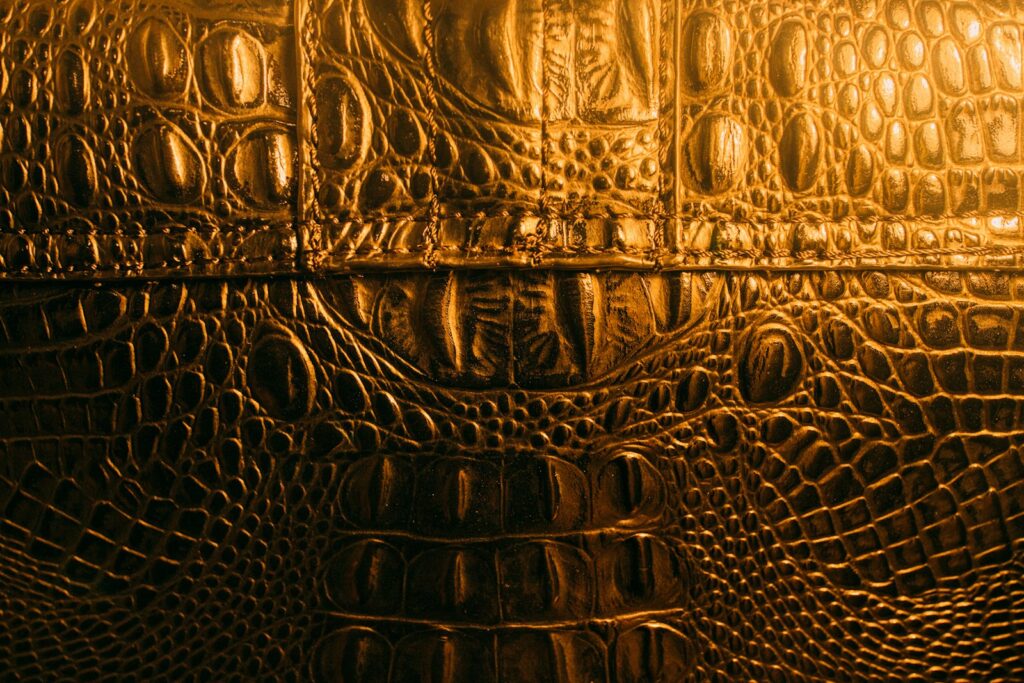
Honest sourcing note: “Alligator” and “crocodile” are different species — true alligator is American (Alligator mississippiensis); most Indonesian/Asian straps are saltwater crocodile (Crocodylus porosus), the same luxury tier. We label species accurately and never sell embossed calf as exotic. Genuine crocodilian is CITES-regulated (typically Appendix II, farmed); international orders ship with documentation, and you are responsible for your country’s import rules — this is general information, not legal advice. Prices are indicative ranges (mid-2026); final pricing is by quote. We are an independent authority and sourcing desk and connect you to vetted makers.
An apple watch alligator strap is a genuine American alligator leather band that connects to your Apple Watch using metal adapters matched to your case size. On this page you’ll find a precise, collector-level guide to real alligator and crocodile options for Apple Watch, how fit and adapters work, and how to commission a correctly-labelled exotic leather apple watch band through our vetted sourcing desk.
What We Mean by a Real Apple Watch Alligator Strap
Most “alligator” Apple Watch bands sold online are not alligator at all. They are:
– Embossed calfskin with a fake scale pattern, or
– Saltwater crocodile (Crocodylus porosus) from Indonesia or other Asian tanneries, often mislabelled as “gator”.
At Alligator Watch Straps, “alligator” has a strict definition:
– American alligator (Alligator mississippiensis) only
– Farmed or legally harvested, CITES Appendix II regulated
– Tanned by established exotic tanneries, then cut and crafted into straps by specialist makers
If the leather is Crocodylus porosus, we call it porosus crocodile, not alligator — even though it is in the same luxury tier and just as desirable for many collectors. If it is calf embossed with a reptile pattern, we call it embossed calf, not exotic.
So, an “alligator band apple watch” on this site means:
– Genuine American alligator
– Fully lined (usually calf or goat), with Apple Watch–specific adapters installed
– Correctly specced by width, taper, and thickness, just like high-end mechanical watch straps
Apple Watch Sizes, Adapters, and How Straps Fit
To fit an exotic strap safely to an Apple Watch, two details matter:
1. The case size of your Apple Watch
2. The adapter size and finish that matches that case
Apple Watch Case Sizes and Matching Adapters
Currently common Apple Watch case sizes:
– 38 mm
– 40 mm
– 41 mm
– 42 mm
– 44 mm
– 45 mm
– 49 mm (Apple Watch Ultra / Ultra 2)
Adapters are sized to span the lug width of the watch and slide-lock into the case. A simplified pairing looks like this:
- 38 mm case
- Use 38 mm adapter (also backward-compatible on many 40/41 mm straps if shaped correctly).
- 40 / 41 mm case
- Use 40/41 mm adapter profile; some 38 mm-labelled adapters also fit, but we match explicitly to the case size.
- 42 mm case
- Use 42 mm adapter (similar footprint to many 44/45 mm adapters, but lock profile must match).
- 44 / 45 mm case
- Use 44/45 mm adapter profile matched to the generation and lock channel.
- 49 mm Ultra
- Use Ultra-specific adapter; wider span and slightly different seating geometry.
We spec adapters by:
– Case size (38/40/41/42/44/45/49 mm)
– Finish (polished/satin silver, space gray/black, gold-tone, etc.)
– Lock style (all current builds use modern spring-lock designs; older screw-locks are now avoided)
How We Build Exotic Leather Apple Watch Bands
Core construction dimensions for a typical alligator or apple watch crocodile strap:
– Connection “width” at adapter
– 38/40/41 mm cases: equivalent to ~20 mm strap footprint
– 42/44/45 mm cases: equivalent to ~22 mm strap footprint
– 49 mm Ultra: equivalent to ~24 mm strap footprint
– Taper (adapter down to buckle end)
– Common: 22→18, 22→16, 24→20 mm equivalents
– Apple Watch uses integrated adapters + either Apple-style “flat” clasp or traditional tang buckle; taper chosen accordingly
– Thickness
– Around 2.4–3.0 mm at the watch end, slimming toward the tip
– Ultra or large wrists may prefer 3.0–3.5 mm for more presence
– Length (excluding adapter)
– Typical: 110/70 mm or 115/75 mm
– Short, regular, long, and custom lengths available by quote
Alligator vs Porosus vs Embossed Calf for Apple Watch
For collectors, species and cut matter more than branding. Here is a straightforward comparison of the three categories you’ll encounter on the “alligator” Apple Watch band market:
| Material | Real Species? | Typical Use | Visual Traits | Comments |
|---|---|---|---|---|
| American alligator (A. mississippiensis) | Yes – genuine exotic | High-end watch straps, leather goods | Rounded, irregular scales; belly/“center-cut” often used for watch straps | Soft, drapes well, classic “gator” look. CITES App. II. |
| Saltwater crocodile (Crocodylus porosus) | Yes – genuine exotic | Top-tier luxury leather, often from Indonesian & Asian farms | More rectangular, organized scales; tighter grain; often slightly glossier | Same luxury tier as alligator; must not be mislabelled as “alligator”. CITES App. II. |
| Embossed calf (“genuine leather” with croc print) | No – not exotic | Budget Apple Watch bands, fashion straps | Perfectly repeating pattern, flat feel, less depth to scales | Can be good quality calf, but should never be sold as alligator or crocodile. |
Our policy:
– We never call porosus “alligator” in product copy or sourcing notes
– We never call embossed calf “exotic”
– Every custom RFQ through our desk gets a written species line: “Species: American alligator (A. mississippiensis)” or “Species: Crocodylus porosus” or “Species: calfskin (embossed crocodile pattern)”
CITES, Legality, and Responsible Sourcing
American alligator and saltwater crocodile are both CITES Appendix II species. That means international commercial trade is allowed under a permit system, largely from regulated farms and managed populations.
Key points for Apple Watch owners:
– Farmed origin
Most strap leather comes from farmed animals processed through established tanneries. Wild harvests exist, but are far less common for strap-grade hides.
– CITES paperwork
– Wholesale or bulk hide/skin shipments normally travel with CITES export permits and corresponding import permissions.
– Finished consumer goods (like a single strap) entering some countries may fall under simplified rules or exemptions, but enforcement and thresholds vary by jurisdiction.
– We are not a law office
We provide accurate species and trade context, but this is not legal advice. If you are importing straps across borders, you are responsible for checking your local regulations and duty/tax treatment.
– EU, UK, US, and others
These markets have clear frameworks for Appendix II exotics. Many consumers never encounter customs issues when buying a single strap from within their region, but checks do happen.
Our sourcing desk only works with suppliers who:
– Declare species accurately
– Can show upstream CITES compliance on request (especially for wholesale)
– Use tanneries with established environmental and waste-handling practices
If you are planning a cross-border wholesale order or brand project, mention your markets clearly when you plan your trip with us via email or WhatsApp, so we can match you with a maker used to that paperwork trail.
Specs: How We Grade and Describe Alligator & Crocodile Straps
Marketing terms like “premium” or “deluxe” mean very little. We focus on:
Species and Cut
– Species: American alligator or porosus crocodile, stated explicitly
– Cut:
– Belly / center cut: larger, more uniform scales, most traditional for dressy Apple Watch builds
– Flank / side: smaller, more dynamic pattern, often used for sportier or thinner straps
– Tail: tighter, longer scales; usually accent pieces or specific design requests
Grading
We avoid vague high/low labels and instead describe the surface:
– “Near full grain, minimal blemish”: no major scars, tiny pin marks only visible under close inspection
– “Visible healed marks”: natural scars integrated into the strap, often requested for character builds
– “Matte” vs “semi-gloss” vs “high-gloss” finish: determined by tannery finishing, not topcoat varnish alone
For wholesale RFQs, we’ll often quote in ranges like:
– “Center-cut alligator, strap-grade, minimal blemish, matte black, panel sizes to cover 120/80 + adapters for 40/41 mm”
Backing, Padding, and Stitching
– Lining:
– Common: Zermatt-style calf or vacuum-tanned goat, both chosen for sweat resistance
– Hypoallergenic linings available on request
– Padding:
– Flat: ~2.4 mm for ultra-low-profile under a cuff
– Light padded: 2.8–3.0 mm, works well for most Apple Watch cases
– Sculpted padded: up to ~3.5 mm, appropriate for 44/45 mm and Ultra when you want more presence
– Stitching:
– Machine stitch, precise and consistent for daily wear
– Hand saddle-stitch for bespoke orders; color matched or contrasted on request
Comfort and Wear on Apple Watch
Alligator and porosus straps feel different from the OEM fluoroelastomer bands Apple ships.
Break-in and Flex
– American alligator:
– Naturally supple once skived correctly and padded with suitable lining
– Breaks in over a few days of regular wear
– Porosus crocodile:
– Slightly firmer out of the box, depending on finish
– Matte porosus usually softens quickly; high-gloss can feel crisper at the edges
The interior lining makes most of the difference against the skin; on a well-made exotic leather apple watch band, the outer scales should never feel sharp or uncomfortable.
Water and Sweat
Exotic straps are not rubber straps. Thoughtful care helps:
– Okay for:
– Daily wear, normal perspiration, occasional light splash
– Avoid:
– Showers, pools, saunas, regular saltwater exposure
If you sweat heavily or live in a humid climate, we often suggest:
– Matte alligator or porosus
– Sweat-resistant lining
– More frequent strap rotation so each piece dries fully
Choosing Between Alligator and Crocodile for Apple Watch
Both American alligator and porosus crocodile pair very well with Apple Watch. Your choice usually rests on three factors:
1. Look
– Alligator: slightly more organic, rounded scale layout; classic luxury-watch aesthetic
– Porosus: more graphic, rectangular belly scales; often chosen for very sharp, modern builds (especially in gloss)
2. Availability & Color
– Alligator offers broad color ranges: black, marine blues, dark greens, tan, burgundy, grays.
– Porosus often leads in very high-gloss blacks, blues, and certain fashion colors, depending on current tannery production.
3. Personal Preference and Ethics
Both species in the strap trade are overwhelmingly from regulated farms. Some clients have regional or personal preferences; our role is to state the facts and the species, then let you choose.
Genuine Exotic vs “Genuine Leather” Apple Watch Bands
You’ll see listings like “Genuine leather alligator pattern Apple Watch band”. This usually means:
– Calfskin with heat-pressed pattern and pigment shading
– No CITES implications, no exotic grain
This is not inherently bad — good calf straps are perfectly respectable — but it must not be sold as alligator or crocodile. We mark such products as:
– “Calfskin, embossed alligator pattern” or
– “Calfskin, embossed crocodile pattern”
If your goal is true exotic texture, depth, and long-term patina, make sure the strap you order lists:
– Species
– Origin or trade status (e.g., farmed, CITES App. II)
– Construction details (lining, padding) rather than just “genuine leather”
Custom Apple Watch Alligator & Crocodile Straps via Our Sourcing Desk
Alligator Watch Straps is an independent editorial resource and sourcing desk. We are not a tannery and not a mass retailer. We:
– Curate and inspect work from specialist strap makers and small workshops
– Verify species claims, cut, and construction before recommending a supplier
– Help collectors, microbrands, and retailers specify exactly what they want
Typical custom Apple Watch exotic projects:
One-off Collector Strap
– Use case: You want a single apple watch alligator strap to match a particular case color and wrist size.
– Process (indicative):
– You send case model, case size, wrist circumference, preferred length and taper, color, finish, stitching.
– We connect you with a vetted maker whose work matches your spec and region.
– You deal directly with the maker on payment and final details; no one can pay to change what we publish, but if you proceed with our partner they may pay us a referral fee at no extra cost to you.
– Indicative price range (last verified June 2026, for a single custom strap with Apple adapters):
– Embossed calf: roughly USD 60–150 equivalent
– American alligator: roughly USD 220–450 equivalent
– Porosus crocodile: roughly USD 260–520 equivalent
(Exact quotes depend on region, finish, adapters, and maker.)
Small-Batch or Wholesale for Brands and Retailers
– Use case: 10–500+ units, private-label alligator or apple watch crocodile strap for Apple Watch or for mechanical watches plus Apple adapters.
– Considerations:
– MOQ (minimum order quantity) varies by maker and leather type; many start around 10–25 units per color/size.
– Color development and consistent grain selection for a scaled product line.
– Regional production vs export (CITES paperwork, lead time).
– Indicative pricing ranges (per strap, ex-works, last verified June 2026):
– Embossed calf: roughly USD 25–70 equivalent at modest MOQs
– American alligator: roughly USD 120–260 equivalent, depending on grade and finish
– Porosus crocodile: roughly USD 160–320 equivalent, especially for high-gloss center-cut
Lead times for wholesale:
– Sampling: often 3–8 weeks including iteration
– Production: often 6–14 weeks after sample approval and material allocation
If you’re planning a new product run, reach out early via plan your trip and mention you’d like WhatsApp coordination; fast back-and-forth helps when you are locking in specs and timelines.
How to Specify Your Apple Watch Alligator or Crocodile Strap
Before you request a quote or custom build, have these details ready:
1. Watch and Adapter
– Apple Watch generation (e.g., Series 8, SE, Ultra 2)
– Case size (38/40/41/42/44/45/49 mm)
– Case color/finish (to match adapter color)
2. Wrist Size and Wear Preference
– Wrist circumference in millimeters (measured snugly, then add your comfort slack)
– Preference: tight, regular, or loose fit
– Any past issues with strap length or hole placement
3. Strap Specs
– Species:
– American alligator
– Crocodylus porosus
– Calf (embossed pattern)
– Cut and finish:
– Belly / center-cut vs flank
– Matte, semi-matte, or glossy
– Color:
– Core: black, dark brown, navy, gray
– Accent: tan, cognac, green, red, etc.
– Stitch:
– Matching or contrasting
– Normal thickness or chunky visual
4. Hardware
– Adapter color (silver, black/space gray, gold-tone, etc.)
– Buckle vs deployant clasp, if applicable
– Any preference for screw vs springbar at the buckle end (applies if the maker uses a traditional buckle instead of fully integrated Apple-style closures)
The clearer your spec, the more accurately a maker can quote and the fewer surprises you’ll see in the finished strap.
Why Use Alligator Watch Straps as an Independent Guide
You can buy “alligator” Apple Watch bands from almost anywhere. Our value is in cutting through the label confusion:
– Accurate species disclosure: alligator is alligator; porosus is porosus; calf is calf.
– Real specs: widths, tapers, thickness, and construction described in concrete numbers.
– Independent editorial stance: we don’t sell house-branded straps; we evaluate and then connect you to makers who meet a standard. No one can pay to change what we publish; if you go ahead with a partner we recommend, they may pay us a referral fee at no extra cost to you.
– Collector-level scrutiny: we care about scale layout, cut choice, and comfort on wrist, not just “luxury” buzzwords.
If you’d like help specifying or sourcing an apple watch alligator strap or an apple watch crocodile strap project — single or wholesale — you can plan your trip with us via email or WhatsApp and we’ll walk through the options.
FAQs: Apple Watch Alligator & Crocodile Straps
Do alligator straps fit Apple Watch?
Yes, alligator straps can fit Apple Watch as long as they are built specifically with Apple Watch adapters sized for your case (38/40/41/42/44/45/49 mm). Traditional 20/22 mm spring-bar straps made for mechanical watches will not lock directly into an Apple Watch without using proper adapters.
Which adapter size do I need for my Apple Watch?
You match the adapter to your Apple Watch case size: 38 mm uses 38 mm adapters, 40/41 mm use 40/41-sized adapters, 42 mm uses 42 mm, 44/45 mm use 44/45, and the 49 mm Ultra models require Ultra-specific adapters. The safest route is to quote the exact model and case size when you order so the maker can supply the correct parts.
Is my Apple Watch “alligator” band really genuine exotic leather?
Many “alligator” Apple Watch bands online are embossed calf with a reptile pattern. A genuine exotic strap should list the exact species (for example “American alligator, A. mississippiensis” or “Crocodylus porosus”) and construction details. If it only says “genuine leather” or “alligator-style,” assume it is calf unless proven otherwise.
Is it legal to buy an alligator or crocodile Apple Watch strap?
American alligator and saltwater crocodile are CITES Appendix II species, and farmed skins are widely traded under permit systems. In many countries it is legal to buy and own finished straps, but import rules, documentation requirements, and enforcement vary. This page is not legal advice; you should verify regulations in your country, especially for cross-border purchases or wholesale orders.
How much does a custom alligator band for Apple Watch cost?
Costs vary by maker, region, and specifications. As of June 2026, a single custom American alligator strap with Apple adapters often falls roughly in the USD 220–450 equivalent range, while porosus crocodile can run roughly USD 260–520. Exact quotes depend on grade, finish, hardware, and any special requests, so the next step is to plan your trip with us and we’ll help you define a precise spec over email or WhatsApp.