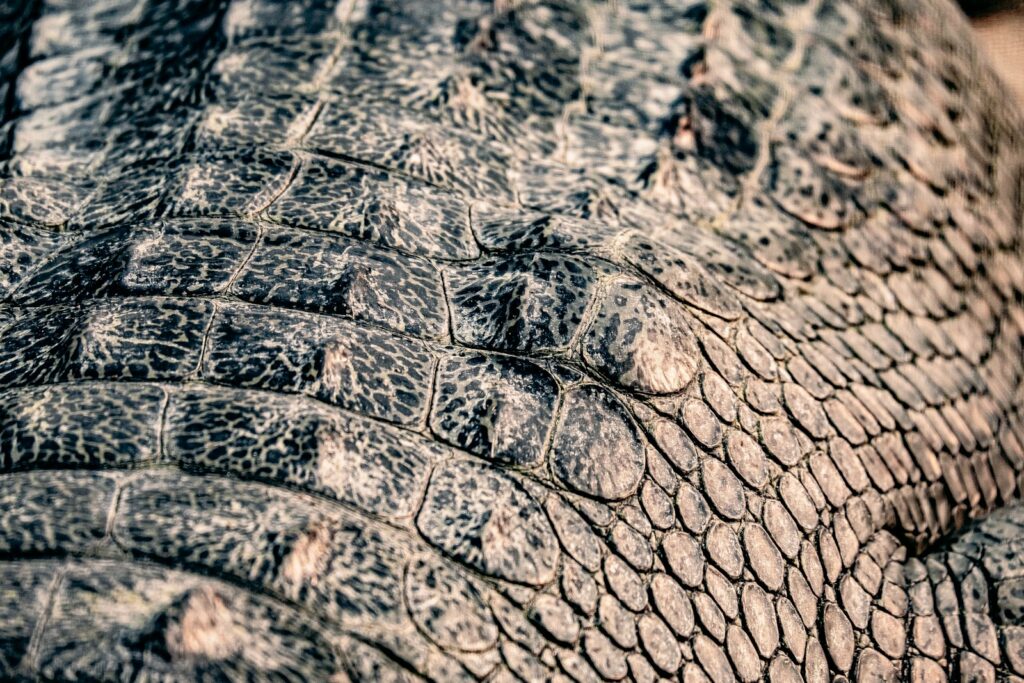
Honest sourcing note: “Alligator” and “crocodile” are different species — true alligator is American (Alligator mississippiensis); most Indonesian/Asian straps are saltwater crocodile (Crocodylus porosus), the same luxury tier. We label species accurately and never sell embossed calf as exotic. Genuine crocodilian is CITES-regulated (typically Appendix II, farmed); international orders ship with documentation, and you are responsible for your country’s import rules — this is general information, not legal advice. Prices are indicative ranges (mid-2026); final pricing is by quote. We are an independent authority and sourcing desk and connect you to vetted makers.
An exotic leather watch strap is any genuine watch band made from legally sourced non‑bovine skins such as alligator, crocodile, caiman, lizard, ostrich or similar specialty leathers. On this page I’ll break down what “exotic” truly means, how the different species compare in look, feel, durability and value, and what to ask for before you spend serious money on an exotic leather watch strap.
What Counts as an Exotic Leather Watch Strap?
In the strict material sense, an exotic skin watch strap is one made from genuine, non‑cowhide leather whose visual and structural character comes from the original animal, not from embossing or printing. Typical exotics used for watch straps include:
- American alligator (Alligator mississippiensis)
- Saltwater crocodile / porosus (Crocodylus porosus)
- Nile crocodile (Crocodylus niloticus)
- Caiman species (especially Caiman crocodilus, Caiman yacare)
- Lizard (Teju, ring lizard)
- Ostrich (full quill and smooth)
- Other specialty leathers (stingray, shark) — less common for dress straps
Embossed calf that imitates alligator or lizard is not exotic leather. It can be perfectly usable and affordable, but the grain is pressed by a plate and the backing is bovine. On Alligator Watch Straps we never call embossed calf an exotic crocodilian strap, even if the pattern looks convincing from a distance.
The Crocodilian Ladder: Alligator vs Crocodile vs Caiman
“Crocodile strap” is used loosely in the market. For collectors, it helps to separate the main crocodilian options by species, cut and typical use. These are different animals, tanned differently, with distinct behavior on the wrist.
American Alligator (A. mississippiensis)
True “alligator” in the leather trade means American alligator, Alligator mississippiensis. It is native to the United States and is the classic luxury dress‑strap material for high horology brands.
- Grain and look: Relatively large, rounded, even scales with soft transitions between tiles. Belly cuts are smooth and fairly symmetrical, which suits traditional padded straps and integrated OEM‑style fits.
- Feel on the wrist: Supple, with a little “body” if padded. High‑end alligator straps, especially in top grades with well‑finished edges, break in quickly and tend to drape cleanly around the wrist.
- Durability: Strong and resilient under normal wear. Like any vegetable or combination tanned leather, it will age with creasing and darkening at holes and bends, but properly finished alligator belly holds up very well as a daily dress strap.
- Typical grades: Skins are graded for surface clarity, uniformity of tiles and absence of defects. Watch‑grade panels mostly come from the cleaner center of the belly. Expect higher prices for large, unblemished tiles (often used on wider straps).
- CITES status: American alligator is listed on CITES Appendix II, with well‑regulated farming and harvest. Legal export and import across borders requires CITES paperwork. This page is not legal advice; you must check your own country’s rules before buying or travelling with an exotic watch band.
Saltwater Crocodile / Porosus (C. porosus)
Saltwater crocodile, trade‑named “porosus”, Crocodylus porosus, is widely farmed in parts of Southeast Asia and Australia. Many Indonesian or other Asian “alligator” straps online are actually porosus crocodile; the leather is similar in luxury tier to American alligator, but it is a different species and should be labelled as such.
- Grain and look: Smaller, more rectangular scales in the belly area, with a crisp, fine pattern. The flanks transition into more irregular tiles. High‑grade porosus has minimal scarring and a clean polish; it often reads slightly sharper and more geometric than alligator.
- Feel: Properly finished porosus is thin, strong and can be made into very sleek straps. Because the scales are smaller, an exotic crocodilian strap in porosus can work well even on narrower lugs such as 18–19 mm without the pattern looking oversized.
- Durability: Similar to American alligator in watch‑strap applications. Thin builds with excessive taper can feel delicate; a sound lining and well‑controlled padding depth are more important to longevity than species alone at this level.
- CITES status: Also Appendix II with farmed and ranched populations. As with all crocodilians, cross‑border shipments require CITES compliance and you are responsible for verifying your jurisdiction’s rules.
At Alligator Watch Straps, we insist on calling porosus “crocodile” or “porosus crocodile”, not “alligator”. They sit in the same broad luxury tier, but species honesty matters for both ethics and future resale clarity.
Nile Crocodile (C. niloticus)
Nile crocodile, Crocodylus niloticus, is another common crocodile leather, especially from African farms.
- Grain and look: Belly scales slightly larger and more rectangular than porosus, with a bit more visible variation across the panel. Fine for watch straps, though the grain can look bolder on very narrow sizes.
- Feel: Well‑tanned Nile crocodile can be flexible, but in commodity grades it sometimes feels a bit stiffer than top alligator or porosus. Lining choice and strap thickness matter a lot here.
- Price positioning: Often a price bracket below premium alligator and porosus for equivalent workmanship. For someone who wants genuine crocodile but prioritizes budget, Nile can be a solid compromise.
- CITES: Typically Appendix II, farmed and regulated. The same permit considerations apply.
Caiman (Caiman crocodilus, C. yacare and relatives)
Caiman skins (especially spectacled caiman and yacare) are widely used for lower‑priced “exotic” straps.
- Grain and look: More rigid, with a noticeable “bony” plate (osteoderm) structure in many areas. Belly sections can be flatter, but often with more texture and less refinement in the tiles.
- Feel: Caiman tends to be stiffer than alligator or porosus. Cheaper caiman straps, especially those with heavy lacquer finishes, can feel boardy and may crack at holes if over‑bent or improperly lined.
- Durability: Highly variable. With careful cutting (choosing more flexible parts of the belly), good splitting and a competent lining, a caiman strap can last for regular dress use. It generally does not match the long‑term resilience of high‑grade alligator or porosus.
- Price positioning: Often the entry point into genuine crocodilian for buyers who want a real exotic skin watch strap but have a modest budget.
Quick Crocodilian Comparison
| Species | Scientific name | Typical grain | Feel (well‑made strap) | Relative price tier* |
|---|---|---|---|---|
| American alligator | Alligator mississippiensis | Rounded, even belly tiles | Supple, smooth, quick break‑in | High |
| Saltwater crocodile / porosus | Crocodylus porosus | Fine, rectangular belly tiles | Thin, strong, sleek | High |
| Nile crocodile | Crocodylus niloticus | Rectangular, slightly larger tiles | Moderately supple | Mid–high |
| Caiman | Caiman spp. | More rigid, textured, “bony” | Stiffer; varies by cut | Entry–mid |
*Relative to other crocodilians, assuming similar workmanship. Actual strap prices depend strongly on brand, country, lining, hardware and build.
Beyond Crocodilians: Ostrich, Lizard and Other Exotics
Crocodilian leather dominates the dress watch space, but other exotic skins also have a legitimate place in a strap collection.
Lizard
Lizard straps (most often Teju and ring lizard) are classics for slim dress watches.
- Appearance: Very fine, small scales with a consistent pattern. On a thin strap, this gives a refined, slightly vintage feel that pairs well with mid‑century case designs.
- Thickness and comfort: Lizard is thin by nature, so most straps are lightly padded or even flat. This keeps total thickness low, useful for small‑diameter dress pieces that sit under a cuff.
- Durability: Reasonable for office and social wear, but not aimed at high‑abuse or sports use. Edges and stitching finish are critical; cheap lizard straps with poor edge paint can fray early.
Ostrich
Ostrich leather comes in two broad strap styles: full‑quill (with the characteristic raised quill follicles) and smooth ostrich (from other parts of the skin).
- Appearance: Full‑quill ostrich has dispersed follicle “bumps” that create a casual, characterful look. Smooth ostrich is subtler, with a fine, irregular grain and rich dye uptake.
- Comfort: Ostrich is soft and breathable, often perceived as more comfortable in warm weather than heavily finished calf.
- Durability: Good for daily wear under normal conditions. The follicles on full‑quill can darken and flatten with time, which many collectors consider part of the charm.
Other Specialty Leathers
Less common but sometimes requested exotics include stingray and shark.
- Stingray: Extremely abrasion‑resistant, with a pebbled, glassy surface. Visually bold, less flexible; often used sparingly or with clever thinning and lining.
- Shark: Tough, grippy, with a wavy grain. Works well on tool watches and divers but is a niche taste for dress pieces.
What Is Not Exotic: Embossed Calf and “Genuine Leather”
Many mass‑market “exotic watch band” listings are simply embossed calf. The surface pattern is pressed into cowhide with a heated plate, then painted or printed.
- How to identify: Pattern repeats too regularly, “pores” or depressions are shallow, and the back is clearly standard bovine leather, sometimes stamped “genuine leather” without any species name.
- Performance: A good embossed calf strap can be perfectly serviceable and a rational choice on a budget or for rough use. It just isn’t crocodile, alligator or lizard, and should never be presented as real exotic skin.
Alligator Watch Straps categorizes embossed and printed leathers separately. We will not label them as exotic skin watch strap materials, even if the pattern mimics a specific reptile.
Honest Species Labelling and CITES Reality
Species honesty is central to our editorial standards.
- Alligator = American alligator only: When we write “alligator”, we mean Alligator mississippiensis. If the strap is porosus, Nile or caiman, we say so.
- Porosus is crocodile: Many Southeast Asian strap sellers casually call porosus “alligator” for marketing reasons. The material is legitimately high‑end, but that does not justify mislabelling.
- Embossed calf is not exotic: Even if a strap looks like gator grain from across the room, if the leather is bovine, we will call it calf, not alligator.
- CITES Appendix II context: Most commercially used crocodilians are on CITES Appendix II, which allows regulated trade from approved sources. Farmed or ranched skins are common. Exporters and importers need proper CITES permits; some countries have extra restrictions or registration requirements.
None of this is legal advice. Laws and enforcement shift and depend on jurisdiction. Before you purchase an exotic crocodilian strap from another country, or travel through customs with multiple exotics, confirm the current rules with your local authority.
Construction Details: Cuts, Widths, Tapers and Linings
An exotic leather watch strap is only as good as its construction. Species is one variable; how the strap is built matters just as much for comfort and lifespan.
Cut Orientation
Crocodilian and lizard straps are usually cut in one of two orientations:
- Center belly cut: Tiles run symmetrically down the strap with the largest scales towards the lugs and more tapered tiles toward the tip. This is the classic high‑end dress‑strap look.
- Flank or tail cut: More irregular, dynamic pattern, sometimes with smaller or elongated scales. This can be visually interesting on sportier watches.
Widths and Tapers
For collectors, real dimensions matter more than marketing labels. Common crocodilian strap sizes we see specced for modern watches are:
- Lug widths: 18 mm, 19 mm, 20 mm, 21 mm and 22 mm are the usual range for custom orders; some vintage pieces use 16 mm or 17 mm.
- Tapers: Typical dress tapers are 20→16 mm, 21→18 mm, 22→18 mm. Sportier builds may use lighter tapers such as 22→20 mm for more presence at the buckle.
- Length: Standard two‑piece lengths usually fall around 115/75 mm or 120/80 mm, with short and long variations for smaller or larger wrists.
On an exotic crocodilian strap, aggressive taper tends to emphasize the tile size difference between lug and buckle ends. That can look elegant in alligator, where belly tiles are relatively even, and a bit more dramatic in Nile or caiman.
Padded vs Flat
- Padded: A foam or leather core between upper and lining gives a domed profile. Common on dressy alligator and porosus straps supplied with luxury watches.
- Flat: No central padding, just upper and lining. This keeps overall thickness low and often increases flexibility. Many enthusiasts prefer flat lizard and ostrich for slim watches.
Linings and Sweat Resistance
The lining takes most of the sweat and movement. It has more impact on comfort and durability than many buyers realize.
- Calf lining: Traditional choice. Good quality, fully tanned calf with edge‑to‑edge glue and neat stitching does fine for normal office use.
- Performance linings: Zermatt‑type or hypoallergenic, sweat‑resistant calves are popular on higher‑end exotics. They resist salt and moisture better than standard calf and reduce color migration onto the wrist.
- Rubber and hybrid: For sportier builds, some custom makers bond exotic uppers to rubber or advanced synthetics for more water exposure. These are still leather straps, not dive straps; we do not recommend immersing any exotic regularly.
Pricing Ranges, Lead Times and What Drives Cost
Exotic strap prices vary widely by species, grade, cut, workmanship and region. As an independent review and sourcing desk, Alligator Watch Straps tracks indicative ranges across the market. These broad figures are last verified June 2026 and refer to typical retail or bespoke prices, not closeout deals.
- American alligator strap
- Indicatively, mid‑market ready‑made straps often fall somewhere in the roughly US$120–250 range. Higher‑end custom builds from respected strapmakers, with premium linings and hand finishing, can run roughly US$250–450+ depending on options.
- Porosus crocodile strap
- Similar or slightly above American alligator in many markets. As a loose guide, around US$150–300 for well‑made ready‑to‑wear pieces, and US$300–500+ for bespoke from known workshops.
- Nile crocodile strap
- Commonly priced a bit lower than alligator or porosus for similar construction—roughly US$90–200 in decent factory builds, more for hand‑made work with upgraded linings.
- Caiman strap
- Frequently found from about US$40–120 for genuine caiman straps from mainstream brands, with higher pricing for handmade or unusual configurations.
- Lizard strap
- Typically around US$70–180 depending on width, lining and finish quality.
- Ostrich strap
- Very roughly US$80–200 for full‑quill or smooth ostrich, again driven by finishing and brand positioning.
For wholesale and OEM, minimum order quantities (MOQs) for exotic skins usually start from low double‑digits per style and color, sometimes higher if a tannery or workshop must open a full skin or color lot. Lead times for made‑to‑order or custom strap runs are often around 3–8 weeks depending on complexity, workshop load and shipping distance.
These figures are directional only. If you are planning a custom strap run or want a precise quote for a particular configuration, you can plan your trip through our sourcing desk; we respond by email or WhatsApp with options from vetted makers. We operate independently: no one can pay to change what we publish; if you proceed with our partner they may pay us a referral fee at no extra cost to you.
Choosing the Right Exotic Skin for Your Watch
“Best” depends on your use case, taste and budget. Here is a practical way to decide.
If you want classic high‑end dress
- Go‑to choice: American alligator belly, padded, with a moderate taper (e.g., 20→16 mm).
- Alternative: Porosus crocodile for a finer tile pattern and slightly crisper look, especially on 18–19 mm lugs.
If you want maximum value per dollar
- Nile crocodile: Good compromise between genuine crocodile appearance and cost, especially in darker colors where tile differences are less obvious.
- Well‑made caiman: If you accept stiffer behavior and want to keep budget lower, a carefully constructed caiman strap from a reputable maker can deliver an authentic exotic feel.
If you have a slim dress watch
- Lizard: Flat or lightly padded lizard straps pair well with thin cases and smaller diameters.
- Smooth ostrich: For a softer, slightly more casual character that still reads refined.
If you prioritize comfort and warmth‑weather wear
- Ostrich with good lining: Soft and breathable, especially with a sweat‑resistant calf lining.
- Alligator with performance lining: For more formal watches that must cope with humid climates or longer wear days.
How Alligator Watch Straps Works: Independent Authority + Sourcing Desk
Alligator Watch Straps is not a tannery and not a strap factory. Our role is:
- Editorial: We test, measure and document exotic straps from multiple makers, focusing on actual species, cut, thickness, taper, stitch density and lining material instead of brand slogans.
- Standards: We insist on correct species naming (alligator vs porosus vs Nile vs caiman), clear disclosure of embossed vs genuine, and realistic expectations about durability and care.
- Sourcing desk: For collectors, microbrands and retailers, we maintain a vetted network of strap makers and wholesalers. We can help match your brief (species, width, taper, MOQ, target price band) to appropriate suppliers and configurations.
If you want help speccing a production run, or you are a collector looking for a specific width/taper/species combination, you can plan your trip with us via email or WhatsApp. We will outline realistic options and trade‑offs so you can buy or commission with clear expectations.
Care, Wear and Realistic Durability
Exotic straps are durable within their design envelope, but they are not indestructible.
- Avoid full submersion: Occasional splashes are usually fine if wiped off, but prolonged soaking, chlorinated pools or saltwater will shorten life and may damage finishes or linings.
- Rotate straps: Letting a strap dry fully off the wrist between wears extends life, especially in hot or humid climates.
- Store away from heat: Avoid leaving an exotic watch band on a dashboard or near heaters; extreme dry heat can cause surface checking and edge paint failure.
- Use appropriate conditioners sparingly: Over‑conditioning can darken or soften finishes excessively. Many modern exotics are better left mostly alone; if in doubt, test on the underside near the lugs.
With reasonable care, high‑quality alligator or porosus straps often serve for years of office and casual use. Caiman and some specialty exotics may be more sensitive, so treat them as you would any fine leather accessory rather than a tool strap.
Summary: Matching Species, Build and Budget
Choosing an exotic leather watch strap is about aligning three things:
- Species and look: Alligator and porosus at the top for classic luxury and even grain; Nile and caiman for value; lizard and ostrich for slim or characterful builds.
- Construction: Appropriate thickness, taper, padding and lining for your watch and wrist habits.
- Legal and sourcing comfort: Clear species labelling, genuine exotic vs embossed, and CITES‑aware suppliers for cross‑border purchases.
If you want a second opinion on a strap you are considering or need help specifying a custom run for your brand, send us the details and photos and we can walk through the specs together. You can plan your trip with us and continue the conversation over WhatsApp for faster back‑and‑forth.
FAQs on Exotic Leather Watch Straps
What counts as an exotic leather watch strap?
An exotic leather watch strap is a genuine leather band made from non‑bovine skins such as alligator, crocodile, caiman, lizard, ostrich, stingray, shark or similar specialty leathers, where the visual character comes from the real animal grain rather than an embossed pattern on calf.
Is American alligator better than crocodile for watch straps?
“Better” depends on what you want. American alligator offers a smooth, even belly pattern and high suppleness, which many dress‑watch collectors prefer. High‑grade porosus crocodile is on the same luxury tier with a finer, more rectangular grain. Nile crocodile and caiman can look excellent at lower prices but may be slightly stiffer or less uniform. Honest species labelling matters more than a blanket “alligator vs crocodile” ranking.
Are exotic leather watch straps durable for daily wear?
Good‑quality alligator, porosus, Nile crocodile, lizard and ostrich straps hold up well for daily office and social wear if you avoid full water exposure, rotate straps and choose a sound lining. Caiman and some specialty exotics can be more rigid and may show age earlier at high‑stress points. As with any leather strap, sweat, water and mechanical abuse will shorten lifespan.
Which exotic skin offers the best value?
For most buyers seeking value, Nile crocodile and well‑made caiman offer genuine crocodilian grain at lower prices than top‑tier alligator or porosus. Lizard and ostrich also deliver distinctive looks at moderate price points. If budget allows and the watch justifies it, American alligator or porosus belly remains the benchmark for traditional high‑end dress straps.
Are there legal issues with buying or travelling with exotic straps?
Most crocodilians used for leather, including American alligator, porosus and Nile crocodile, are on CITES Appendix II, which allows regulated international trade from approved sources. Exporting or importing exotic leather products can require CITES permits and may be subject to additional national rules. This is not legal advice; before purchasing from abroad or travelling with multiple exotic straps, you should verify the current regulations with your local authorities.