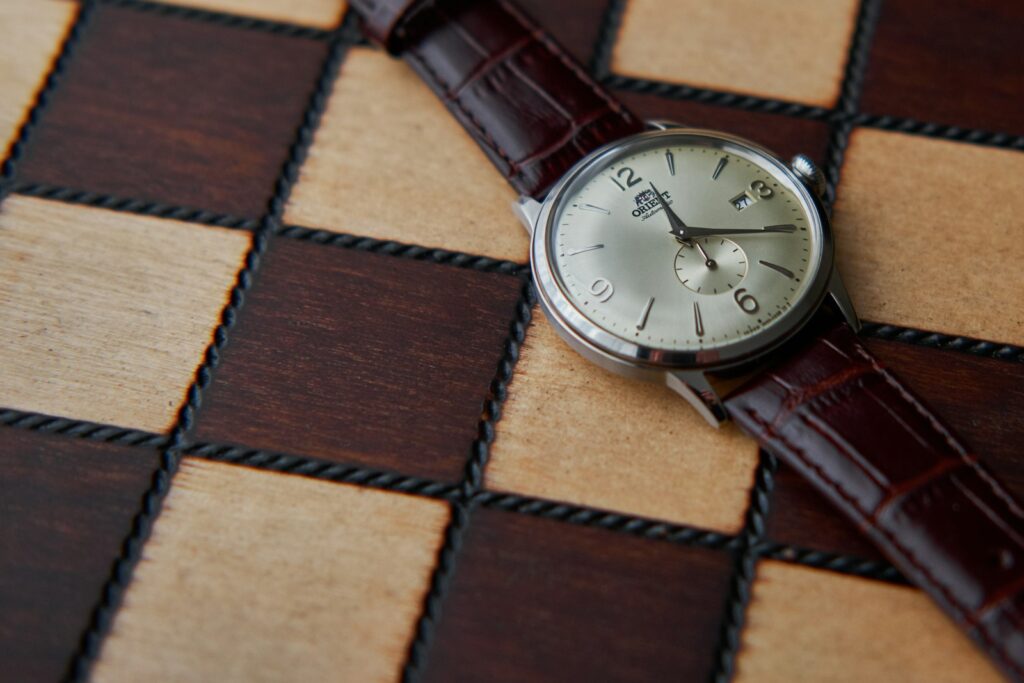
Honest sourcing note: “Alligator” and “crocodile” are different species — true alligator is American (Alligator mississippiensis); most Indonesian/Asian straps are saltwater crocodile (Crocodylus porosus), the same luxury tier. We label species accurately and never sell embossed calf as exotic. Genuine crocodilian is CITES-regulated (typically Appendix II, farmed); international orders ship with documentation, and you are responsible for your country’s import rules — this is general information, not legal advice. Prices are indicative ranges (mid-2026); final pricing is by quote. We are an independent authority and sourcing desk and connect you to vetted makers.
An alligator watch strap manufacturer is the workshop or factory that physically cuts, stitches, and finishes straps from genuine American alligator hide. On this page, we explain how to choose a truly competent, legal, and honest maker—and how our sourcing desk connects you with vetted crocodile and alligator strap manufacturers, primarily in Indonesia and Asia.
What Alligator Watch Strap Manufacturer Actually Means
Most marketing copy blurs three roles:
– The reptile farm
– The tannery (that turns skin into leather)
– The strap maker (that turns leather into a watch strap)
“Alligator watch strap manufacturer” correctly refers to the last one: the strap maker.
- Farm: Raises the animals, harvests skins under CITES and local wildlife law.
- Tannery: Buys raw skins, tans and finishes leather (matte, semi-matte, gloss, nubuck, etc.).
- Strap maker / manufacturer: Purchases finished hides, patterns, skives, glues, stitches, and lines the strap to your specs.
At Alligator Watch Straps, we are not a tannery and we are not a farm. We are:
– An independent reference for collectors and brands on species, legality, and grading.
– A sourcing desk that vets and coordinates with real exotic strap workshops—especially watch strap maker Indonesia partners and other Asian and European manufacturers—for B2B, private-label, and serious hobbyists.
No one can pay to change what we publish; if you proceed with our partner they may pay us a referral fee at no extra cost to you.
Alligator vs Crocodile: Honest Species Labelling Only
The foundation of ethical sourcing is naming the species correctly. That means:
- True “alligator” = American alligator (Alligator mississippiensis)
- Most Indonesian “alligator” straps are actually saltwater crocodile (Crocodylus porosus)
- Embossed calf with a reptile pattern is not exotic leather and should be labelled “embossed calf” or “stamped calf.”
Both American alligator and saltwater crocodile are high‑end exotics, but they are not the same animal and they sit in different regulatory contexts and markets.
| Parameter | American Alligator | Saltwater Crocodile (Porosus) |
|---|---|---|
| Scientific name | Alligator mississippiensis | Crocodylus porosus |
| CITES listing* | Mostly Appendix II (managed trade) Some local populations Appendix I |
Appendix II (managed trade) |
| Common strap marketing name | “Alligator” | “Crocodile”, often “porosus” at the top end |
| Typical origin for straps | USA skins → tanneries in US/EU/Asia | Indonesia, Australia, PNG, SE Asia → tanneries in Asia/EU |
| Scale look | Squarer belly tiles, less “dot” pitting, softer transitions | More pronounced scale edges, pores (“follicles”) often visible |
| Perceived luxury tier | Flagship exotic for many Swiss brands | Equal or higher on certain high‑end models (porosus wallets, bags, straps) |
*CITES statuses evolve; always verify current listings and your local implementation before trading.
We will never:
– Call porosus “alligator.”
– Call embossed calf “crocodile” or “alligator.”
– Suggest that porosus is “fake” alligator—both are legitimate luxury exotics, simply different species and supply chains.
How CITES and Legality Actually Work for Straps
CITES (the Convention on International Trade in Endangered Species of Wild Fauna and Flora) is the global framework that governs trade in alligator and crocodile skins and leather. Both A. mississippiensis and C. porosus fall within CITES, mostly under Appendix II.
Key points for buyers:
- CITES regulates international trade, not domestic ownership. Your country may add its own rules on top of CITES.
- Farmed Appendix II animals can be traded legally with permits. That includes virtually all farm-raised alligator and porosus used in watch straps today.
- Finished products like watch straps may still require CITES re‑export permits when crossing borders, depending on your jurisdiction.
- This page is not legal advice. You or your legal/compliance team must confirm requirements for your country and your shipment.
For a traceable and compliant strap, there should be a clear paper or digital trail:
- Farm → Tannery: Export permits / declarations documenting species, source (farmed vs wild), and destination tannery.
- Tannery → Strap manufacturer: Invoices referencing species and (where applicable) CITES permit numbers or batch IDs.
- Manufacturer → Brand / You: Invoices and spec sheets correctly naming species, origin country of leather, and finish.
Our role is to help you find crocodile strap maker and alligator workshops that are willing and able to document this chain—particularly critical for B2B buyers, microbrands, and distributors.
Inside the Indonesian Crocodile Strap Maker Ecosystem
Indonesia is a major player in saltwater crocodile (C. porosus) farming and processing. For watch straps, that translates into:
- Good access to small and medium‑sized porosus skins suitable for fine leather goods.
- Competitive labor costs for hand‑finished straps.
- A dense network of small to mid‑scale exotic strap workshop operations.
What it is not:
– It is not a primary source of American alligator skins. Those are overwhelmingly from the United States, then exported to tanneries worldwide.
– It is not a guarantee that every “alligator” label in local markets is truthful; mislabelling is common in mass online listings.
Independent of marketing language, most Indonesian exotic watch straps are:
– Species: Saltwater crocodile (C. porosus), sometimes Siamese or other farmed crocodiles, occasionally python or lizard.
– Finish: Semi‑matte or gloss belly, occasionally hornback; color range from black/brown to bright fashion tones.
– Construction: Hand‑stitched or machine‑stitched over padded cores, on leather or synthetic lining.
Our screening for a crocodile strap maker in Indonesia includes:
- Willingness to specify species in writing.
- Invoices that separate exotics from non‑exotics and correctly name them.
- Ability to quote consistent specs (lug width, buckle width, taper, length, thickness).
- Quality of skiving, edge finishing, and lining choice appropriate to price tier.
If a workshop refuses to state the species or tries to re‑label porosus as “genuine alligator,” we do not refer clients to them.
How to Choose a Competent Exotic Strap Manufacturer
1. Start With Use Case and Specs
Before you choose a manufacturer, define the strap in technical terms. A serious alligator watch strap manufacturer or crocodile workshop should be entirely comfortable with this kind of specification:
- Lug width: e.g., 20 mm, 21 mm, 22 mm.
- Buckle width / taper: e.g., 20→16 mm, 22→18 mm; or no taper.
- Length (long/short parts): e.g., 115/75 mm, 120/80 mm, custom for larger wrists.
- Thickness: e.g., 2.5 mm flat, or 4.0→2.5 mm padded taper.
- Construction: Padded vs flat, straight vs curved-end, quick‑release spring bars or standard.
- Stitching: Machine or hand saddle stitch, thread color and gauge.
- Lining: Calf, Zermatt‑type sweat‑resistant leather, or proprietary hypo‑allergenic options.
If a supplier cannot articulate these dimensions clearly, or pushes you toward vague S/M/L sizing without millimeter information, they are not set up for serious collectors or brand production.
2. Demand Clear Species and Material Labelling
Non‑negotiable basics:
- Species named in full (e.g., “Alligator mississippiensis” or “Crocodylus porosus”).
- Section of hide used (belly, flank, tail, hornback, etc.).
- Finish (matte, semi‑matte, gloss, nubuck, “ombré,” etc.).
- Lining material type and origin (e.g., “calf leather lining, EU‑tanned”).
If you see “genuine leather—exotic pattern,” assume this is embossed calf, not alligator or crocodile, unless backed by proper documentation.
3. Evaluate Leather Grade and Cut
Grading is not globally standardized, but quality‑oriented manufacturers will talk about:
- Grade range: For example, “premium/first selection belly cut” vs “second grade with small grain defects.”
- Defects: Scars, holes, insect marks, or uneven dye penetration.
- Pattern symmetry: Straps for dress watches typically favor centered, symmetrical belly scales.
Expect to pay more for:
– Long, uninterrupted belly patterns suitable for large lug widths.
– Color‑critical work (e.g., exact matching of OEM dial or case accents).
– Project‑by‑project hide selection.
4. Request Process and Compliance Transparency
For B2B or larger hobbyist orders, ask:
- What is the origin country of the exotics used?
- Which tanneries or trading houses supply them? (We do not publish names unless they are already public and documented.)
- Can they provide paperwork that at least echoes CITES species names and codes on invoices?
- How are waste off‑cuts handled (re‑used for smaller goods vs discarded)?
Again, we do not claim relationships with any specific luxury tannery; responsible strap makers source from a mix of larger and smaller tanneries, depending on finish and price tier.
Our Role: Independent Sourcing Desk, Not a Factory
Alligator Watch Straps operates as an industry‑facing guide and sourcing coordinator:
- We do not own a reptile farm.
- We do not tan hides.
- We do not run a mass‑production factory.
What we do:
1. Vet Exotic Strap Workshops and Manufacturers
We continuously assess:
- Species and material honesty in product descriptions and invoices.
- Technical competence: ability to execute tight tolerances for lugs, tapers, and thickness.
- Consistency of finish across batches (color, gloss level, stitching).
- Openness to small pilot runs for new designs.
Our network includes:
– Independent artisans (very small volume, high touch).
– Mid‑size exotic strap workshop operations in Indonesia and neighboring countries.
– Larger OEM factories that can handle brand‑scale runs once a design is proven.
2. Match You to the Right Maker Tier
Different projects need different partners:
- Microbrand / limited edition: Typically 50–300 straps per color; we steer you toward flexible, quality‑oriented workshops.
- Retailer private label: 20–50 straps per reference, replenished; requires a stable catalog approach.
- Collector customization: Very small quantities (1–5 straps) with special sizing or unusual colors; usually artisan or small‑batch makers.
We help you balance:
– Target retail price.
– Species preference (alligator vs porosus crocodile vs non‑exotic).
– Origin considerations (e.g., desire for Indonesian manufacture vs EU or US).
– Lead times and re‑order reliability.
3. Coordinate Specifications and Quotations
We translate your vision into a manufacturable spec:
- Watch model / lug spec
- Exact lug width, any curve or integrated design constraints.
- Strap architecture
- Flat vs padded, thickness profile, taper.
- Species & cut
- Alligator belly vs porosus belly/hornback; color and finish.
- Stitch and edge
- Contrast vs tone‑on‑tone, painted vs turned edges.
- Hardware
- Standard tang, deployant compatibility, spring‑bar choice.
Once the spec is clear, we obtain indicative quotes from vetted partners and present them with:
– Unit price ranges.
– Estimated MOQs (minimum order quantities).
– Production and shipping lead‑time ranges.
For RFQs, plan your trip to the right manufacturer via our sourcing desk—email or WhatsApp both work for sharing reference photos and watch measurements.
Indicative Pricing, MOQ, and Lead Times
All figures below are indicative ranges, last verified June 2026, and can shift with currency, leather costs, and labor conditions. Always treat them as starting points, not guarantees.
1. Workshop‑Level Exotic Straps (Indonesia / Asia)
- Species: Primarily Crocodylus porosus and other crocodiles, occasionally American alligator via imported hides.
- MOQs: Often ~10–30 pieces per color/spec for B2B; single‑piece orders sometimes accepted at retail‑like pricing.
- Indicative ex‑factory unit prices:
- Standard porosus or crocodile strap, lined calf: roughly USD 60–150 per strap at low MOQs.
- Higher‑grade selection, special linings or complicated shapes: USD 120–220+ per strap at low MOQs.
- Lead times: About 3–8 weeks production for small batches after spec and deposit, plus shipping.
2. Artisan / Bespoke Makers
- Species: Often American alligator, sometimes porosus or other exotics.
- MOQs: As low as 1 strap, but waitlists and capacity are limited.
- Indicative prices: Approximately USD 150–400+ per strap, depending on name recognition, finishing, and leather grade.
- Lead times: A few weeks to several months.
3. Larger OEM / Brand‑Scale Factories
- Species: Mix of exotics and calf; can work with client‑supplied hides where allowed.
- MOQs: Often >100–300 straps per spec/color.
- Indicative prices: Broadly USD 40–110 per strap for simpler exotics at scale, but highly design and spec dependent.
- Lead times: 6–12+ weeks for first production, then scheduled runs.
We will never quote a single fixed price on this page; for a real project, you’ll receive a written range or specific quote tied to a clear specification.
Traceability: Farm → Tannery → Strap
Realistic traceability depends on scale and your compliance needs.
1. Farm‑Level Traceability
For most watch straps, you will not see an individual farm named on the finished product. What is more practical:
- Knowing the country of origin for the skins (e.g., USA for alligator, Indonesia/Australia for porosus).
- Ensuring the skins were legally sourced under CITES Appendix II with valid export documents at the raw or crust stage.
In highly regulated or luxury contexts, some brands pursue:
- Lot‑level traceability from farm to tannery.
- Audits or certifications at farm and tannery sites.
These options exist, but they usually command higher material costs and tighter supply.
2. Tannery‑Level Traceability
A serious alligator or crocodile strap maker should at least be able to tell you:
- Which country the leather was tanned in.
- Whether the tannery is a dedicated exotic tannery or a division of a larger leather group.
- Basic finishing details: re‑tanned, drum‑dyed, surface‑finished, etc.
We do not publish or leverage the names of specific luxury‑house tanneries in our marketing; any references to tannery origin are generic unless publicly verifiable.
3. Strap‑Level Documentation
For your own quality control and compliance files, we recommend retaining:
- Invoices listing species and leather type.
- Internal spec sheets for each strap model (dimensions, construction, lining, species, finish).
- Correspondence with the manufacturer that confirms species and origin claims.
For cross‑border shipments of exotics, consult your legal counsel or customs broker on:
- Whether your straps require CITES re‑export permits.
- How to declare HS codes and species accurately on customs documents.
We are happy to liaise with your compliance or logistics teams alongside the manufacturer, but final responsibility rests with the importer/exporter of record.
Ethical and Practical Considerations
Farmed vs Wild
Most watch strap leather from American alligator and saltwater crocodile is farmed. CITES allows controlled trade in farmed Appendix II animals, and many conservation arguments hinge on:
– Creating economic value for living populations.
– Incentivizing habitat protection.
As a buyer, key actions include:
- Working only with species‑transparent suppliers.
- Preferring farms and tanneries that operate within clear legal frameworks.
- Staying informed about evolving regulations in your and your supplier’s jurisdictions.
Alternatives to Exotic Leather
There are legitimate reasons to avoid exotics:
– Personal ethics.
– Import constraints in your country.
– Brand positioning or customer expectations.
In these cases, you can still work with many of the same strap makers using:
- Embossed calf with alligator or crocodile pattern (honestly labelled as such).
- Non‑animal materials or performance synthetics for sport‑oriented designs.
We can help you find workshops experienced in both exotic and non‑exotic constructions so that your catalog can serve different customer segments and regulatory environments.
How to Start a Project Through Our Sourcing Desk
To work with a vetted alligator or crocodile strap manufacturer:
- Gather your specs: Watch references, lug width, target strap dimensions, species preference, target retail price.
- Share reference photos: Any OEM strap you like, dial/case photos, or sketches.
- Contact us: Use plan your trip to a suitable manufacturer via our contact form or WhatsApp—both support attachments and back‑and‑forth clarifications.
- We propose options: One or more suitable manufacturers, pricing ranges, MOQs, and typical lead times.
- You decide and contract directly: We remain available to help with spec questions and, where useful, sanity‑check documentation language.
We aim for precision and realism: exact where we can be, clearly approximate where we cannot.
FAQs
Do you make the alligator straps yourselves?
No. Alligator Watch Straps is not a farm, tannery, or factory. We are an independent reference and sourcing desk. We help you specify, evaluate, and connect with vetted alligator and crocodile strap makers that can build to your requirements.
How can I tell if a strap is real alligator or just crocodile or embossed calf?
Check the documentation and species naming first. “Alligator mississippiensis” is American alligator; “Crocodylus porosus” and other “Crocodylus” species are crocodiles. If a seller uses generic “genuine leather” language with “alligator pattern,” it is almost always embossed calf. Physical scale patterns can help, but mislabelling is common, so written species identification from the maker is essential.
What certifications or documents should I ask a strap maker for?
Request invoices or spec sheets that clearly state species, leather type, and origin country of the hides. For cross‑border shipments of exotics, your customs broker or legal counsel may recommend CITES permit references or copies from earlier stages in the supply chain. At strap level, consistent species naming and clear material descriptions are the minimum standard.
Can you source American alligator straps from Indonesian manufacturers?
Some Indonesian and Asian manufacturers work with imported American alligator hides, while most primarily use locally linked crocodile, especially saltwater crocodile (porosus). For genuine American alligator straps, we match you with makers who explicitly confirm that they are using alligator and are comfortable documenting it as such. We will not represent porosus straps as “alligator.”
What are typical MOQs and prices for a private-label exotic strap project?
For small private-label runs with vetted workshops, MOQs often start around 10–30 pieces per color/spec, with indicative ex‑factory prices last verified June 2026 in the USD 60–150 per strap range for standard crocodile and higher for top‑grade or complex builds. Larger OEM factories may require 100+ units per spec but offer lower unit costs. Exact numbers depend on design, species, and finishing, so contact us with your specs for a project-specific quote.